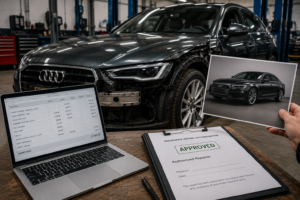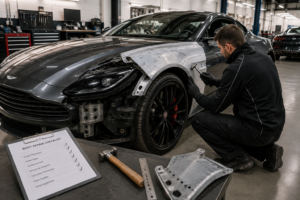
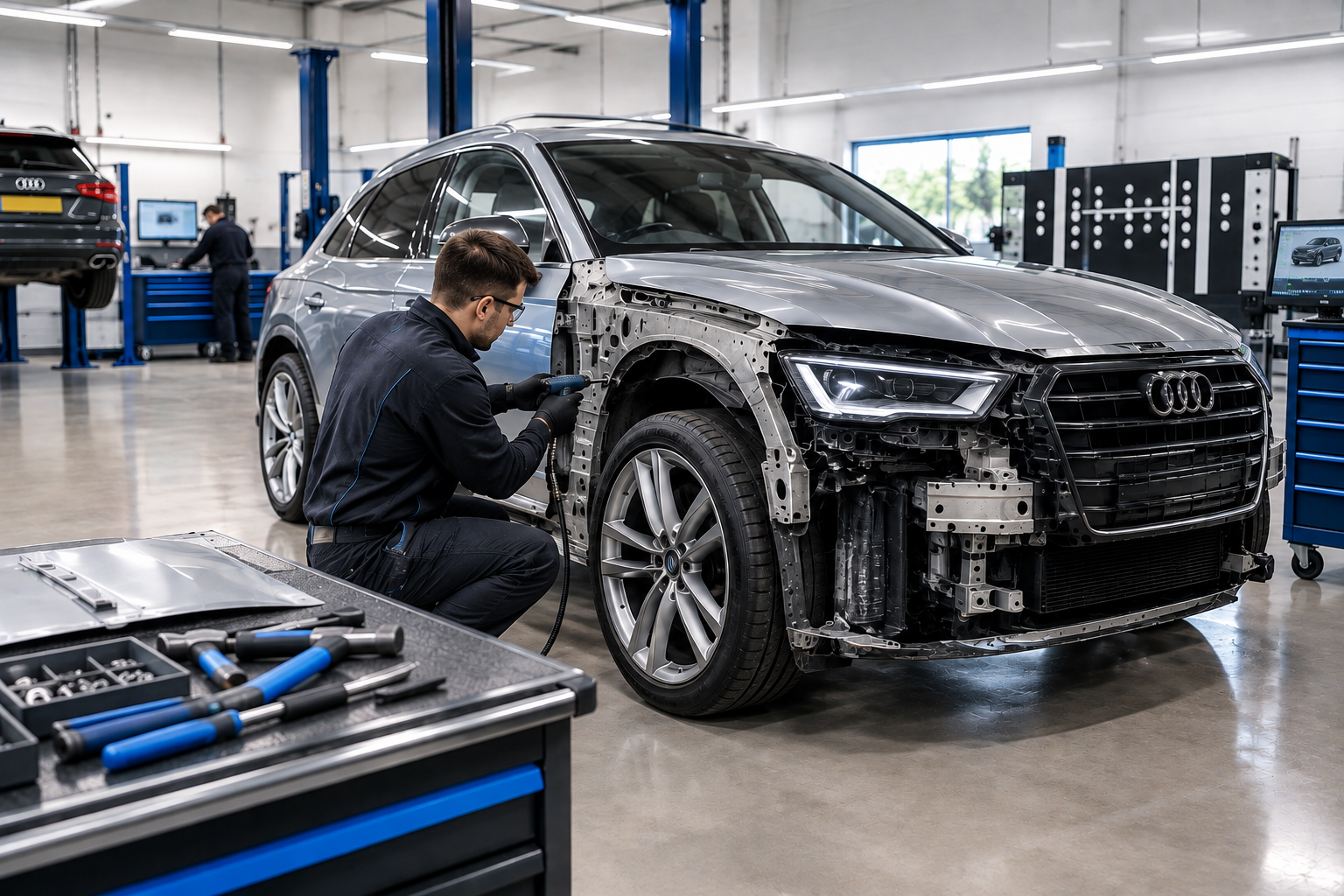
Your insurer has offered you a bodyshop before you’ve even finished reading the claim confirmation email. For most cars, that’s a straightforward convenience. For an aluminium-bodied Audi, it’s a decision worth pausing on.
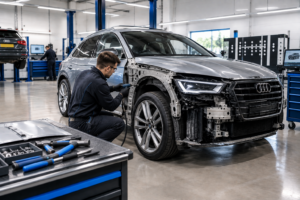
Many Audi models — including the A6, A8, Q7 and e-tron range — use aluminium body panels that require a dedicated, isolated repair area, aluminium-specific welding, riveting and bonding techniques, and specially trained technicians. Not every insurer-approved bodyshop is properly equipped for this work, so it’s worth confirming aluminium capability before agreeing to a booking.
Why Is Audi Aluminium Bodywork Different From Steel?
Aluminium and steel behave differently under repair, and treating them the same way causes problems that aren’t visible until much later. Audi has used aluminium extensively since the original Audi Space Frame concept, and later generations blend aluminium with steel and composites in what the industry calls multi-material construction.
The core issue is galvanic corrosion. When steel particles — from grinding discs, welding spatter, or even shared tools — contaminate an aluminium panel, the two metals react in the presence of moisture. That reaction eats away at the aluminium from the inside, and it can take months to surface as bubbling paint or pitting, well after the car has left the workshop.
Structural aluminium also can’t be repaired with the welding techniques a steel-trained technician would reach for by default. Audi’s aluminium components are typically joined using self-piercing rivets, structural adhesives, and specific weld processes such as MIG brazing, applied in a sequence and to torque and cure specifications set by the manufacturer. Get the process wrong and the panel can look fine while no longer performing as designed in a future collision.
Which Audi Models Use Aluminium Body Panels?
Aluminium content varies by model rather than being uniform across the range, which is exactly why it needs checking rather than assuming. The A8 has used a predominantly aluminium body since the first Audi Space Frame generation, and the A6 and A7 use aluminium extensively in doors, bonnet, boot lid and outer structural panels alongside a steel core.
The Q7 and Q8 combine aluminium body panels with a steel platform, and Audi’s e-tron electric models use aluminium in the body structure partly to offset battery weight. Even models that aren’t predominantly aluminium — the A4 and A5 ranges, for instance — commonly use aluminium bonnets, wings or doors. [VERIFY: current model-by-model aluminium panel breakdown against latest Audi UK technical specifications, as this changes across facelifts and generations]
The practical point is the same regardless of model: if your Audi has any aluminium panels involved in the damage, the repair needs an aluminium-capable workshop, not a generalist one working outside its usual materials.
Why Can’t Any Bodyshop Repair Aluminium Audi Panels?
A bodyshop that repairs mainly steel-bodied cars isn’t necessarily unskilled — it’s simply set up for a different material, with different equipment, tooling and workflow than aluminium repair demands.
Cross-Contamination and Isolated Repair Areas. Aluminium repair needs its own dedicated area, physically separated from steel work, with its own tools, dust extraction and grinding equipment that never touch steel. Without that separation, steel particles transfer onto aluminium surfaces and trigger the corrosion process described above. A shared workshop floor, shared grinding wheels or a technician moving between steel and aluminium jobs without changing kit is enough to introduce contamination that won’t show up on the day the car is collected.
Welding, Riveting and Bonding Techniques. Aluminium requires specific joining methods — self-piercing riveting, structural bonding adhesives, and aluminium-rated welding equipment set to different parameters than steel welding. These processes need their own training and certification, separate from a technician’s general bodywork qualifications, because the tolerances for aluminium are less forgiving of guesswork.
Specialist-Trained Technicians. Manufacturer-recognised aluminium repair training is a specific qualification, not something absorbed as part of general bodywork experience. A technician needs to know Audi’s repair method for each panel and joint type, not just aluminium repair in general, because methods differ between manufacturers and even between platforms within the same manufacturer.
ADAS Calibration After Repair. Most current Audis carry Advanced Driver Assistance Systems — cameras, radar and ultrasonic sensors supporting features like lane assist, adaptive cruise control and automatic emergency braking. Any repair that disturbs a bumper, windscreen or panel near these sensors can knock their calibration out, and putting that right needs Audi-specific targets and software, not a generic reset.
Do I Have to Use My Insurer’s Approved Bodyshop?
No. Your insurer can recommend a repairer from its network, and may present that option as the default path, but the choice of repairer is yours as the policyholder, not theirs to make on your behalf. [VERIFY: current FCA/ABI wording on a policyholder’s right to choose their own repairer, in case referenced insurer terms need updating]
Insurer networks exist mainly to manage cost and turnaround across a large volume of ordinary claims, which is a reasonable business need but not the same thing as matching a repairer to your specific car. If your Audi has aluminium body panels involved in the damage, exercising your right to choose means you can ask for a workshop that’s actually equipped for the material.
Stating your preference early, at first notification of loss, keeps your options open. Once a car has already been allocated to a repairer within the insurer’s system, redirecting it to a specialist can mean extra calls and correspondence you’d rather avoid.
What Should You Ask Before Your Insurer Books a Repair?
A short set of direct questions, asked before you agree to any booking, tells you quickly whether a bodyshop is genuinely equipped for aluminium work.
- Is aluminium repair carried out in a dedicated, isolated area, separate from steel work? This is the single most important question — without physical separation, contamination risk exists regardless of how skilled the technicians are.
- Are technicians specifically trained and certified in aluminium repair, not just general bodywork? Ask for evidence of this training rather than taking a verbal assurance at face value.
- What welding, riveting and bonding equipment do you use for aluminium, and is it kept separate from steel tooling? A workshop that can’t answer this clearly probably doesn’t have the separation in place.
- Is ADAS calibration carried out in-house, and will I receive written confirmation once it’s done? If the car needs sending elsewhere for calibration, ask how that’s managed and by whom.
- Do you fit genuine Audi (OEM) parts as standard? Aftermarket panels aren’t necessarily built to the same aluminium specification, which matters for both fit and long-term corrosion resistance.
- Do you hold BSI approval or another recognised industry accreditation for accident repair? Independent accreditation is a more reliable signal than a repairer’s own claims about its capability.
If a bodyshop hesitates on any of these, or gives a vague answer, treat that as useful information rather than pressing on regardless.
What Happens If the Wrong Bodyshop Repairs Aluminium Panels?
The first risk is structural. A repair that hasn’t followed Audi’s specified joining methods can leave a panel or structural component that looks straight but no longer absorbs and distributes impact energy as designed — a difference that only becomes apparent in a future collision.
The second is corrosion. Steel contamination introduced during an incorrect repair can sit dormant for months before surfacing as bubbling, pitting or discolouration around the repaired area, by which point tracing the cause back to the original repair is far harder.
The third is provenance and value. A repair carried out with the wrong process, tools or parts can be identifiable to a trained eye at resale or valuation, and an incomplete or undocumented repair history can affect what a specialist dealer or future buyer is willing to pay. [VERIFY: any published data on resale value impact from incorrectly repaired aluminium panels]
Audi Aluminium Body Repair at Crash Specialist Garage
Crash Specialist Garage is a BSI-approved bodyshop in Macclesfield, Cheshire, working across 15 prestige and performance marques including Audi, Aston Martin, Porsche, Range Rover and Tesla. Aluminium repair sits at the centre of that work, not as an occasional job for a workshop mainly set up around steel.
That means a dedicated, isolated aluminium repair area kept entirely separate from steel work, technicians trained specifically in aluminium joining methods, and ADAS recalibration carried out in-house to Audi’s specifications once bodywork is complete.
Working across 15 marques rather than one also means the workshop handles aluminium, steel and multi-material construction every week, across a wide range of models and damage types, rather than treating an aluminium Audi as an unusual job that comes round once in a while.
Get an Assessment
If your Audi has aluminium body panels involved in a collision, the choice of repairer is the single biggest factor in whether the car comes back exactly as it was. Before agreeing to any booking your insurer suggests, ask the questions above — and contact Crash Specialist Garage in Macclesfield for an assessment and a written quote.
Frequently Asked Questions
Do I have to use the bodyshop my insurer recommends for my Audi repair?
No. Your insurer can suggest a repairer from its network, but the decision is yours as the policyholder. It’s worth stating your preference for a specialist, aluminium-capable bodyshop as early as possible in the claims process.
Do all Audi models have aluminium body panels?
Aluminium content varies by model — the A8 is predominantly aluminium, the A6, A7, Q7, Q8 and e-tron range use aluminium extensively alongside steel, and even smaller models commonly use aluminium bonnets, doors or wings. Check with a specialist whether your specific model and damaged panels involve aluminium.
Why does aluminium repair need a separate workshop area from steel repair?
Steel particles from grinding, welding or shared tools can contaminate aluminium panels and trigger galvanic corrosion, which eats away at the aluminium from the inside and often doesn’t surface until months later. A dedicated, isolated aluminium area with its own tools prevents this cross-contamination.
Will an incorrect aluminium repair affect my Audi’s warranty?
It can, if the repair wasn’t carried out to manufacturer specification using the correct joining methods and genuine parts. Using a BSI-approved, aluminium-trained bodyshop that documents its process reduces the risk of warranty complications later.
What is ADAS calibration and why does it matter after an Audi bodywork repair?
ADAS stands for Advanced Driver Assistance Systems — the cameras, radar and sensors behind features like lane assist and automatic emergency braking. A collision or the bodywork repair that follows it can knock these sensors out of alignment, so they need recalibrating with Audi-specific targets and software to work correctly again.
How do I know if a bodyshop is properly equipped for Audi aluminium repair?
Ask whether aluminium repair happens in a dedicated, isolated area kept separate from steel work, whether technicians hold specific aluminium repair training, and whether ADAS calibration is carried out in-house. A genuine specialist will answer these questions directly and without hesitation.