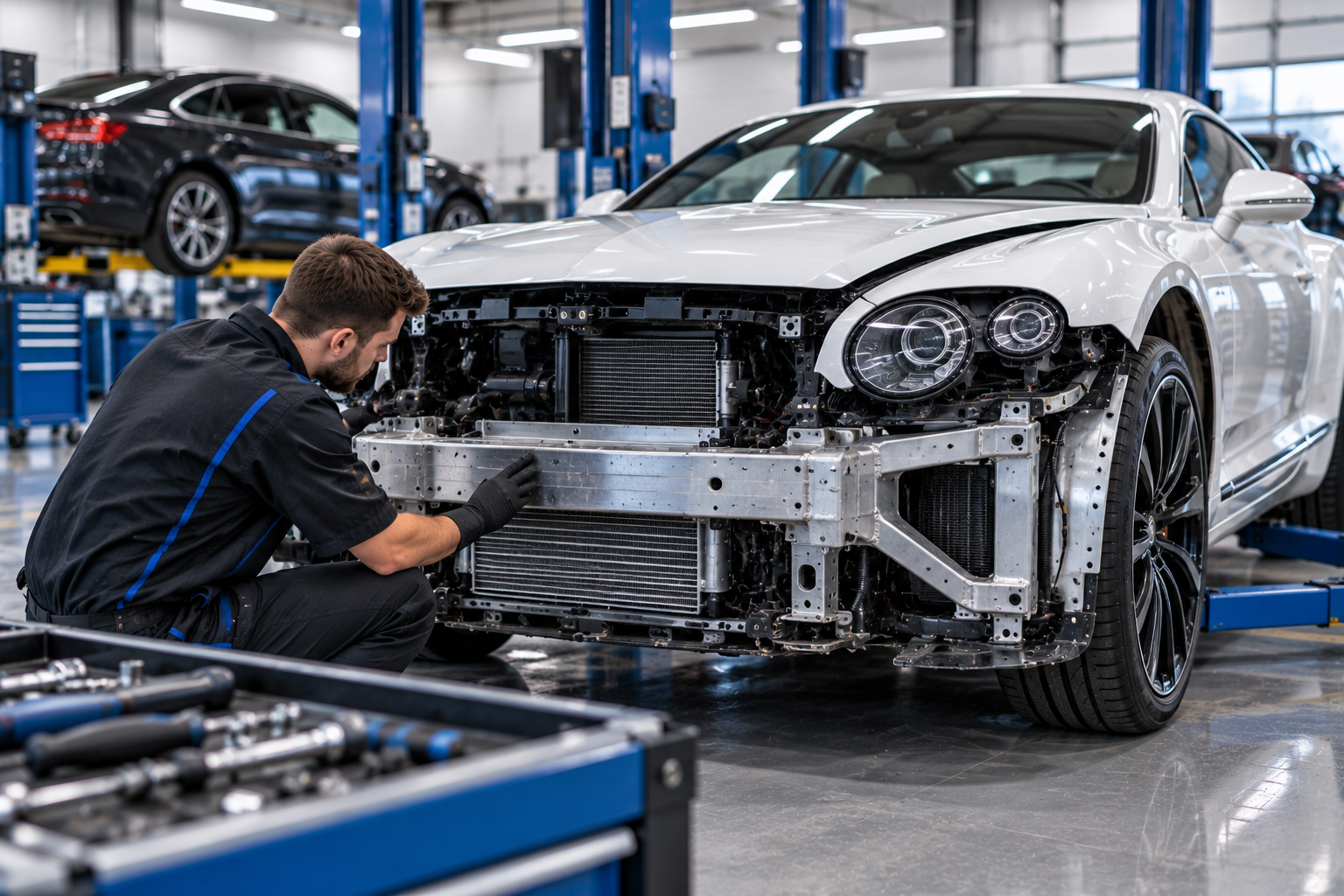
A Bentley isn’t simply an expensive car with a famous badge. It’s a vehicle built from specialist materials, finished by hand, and packed with safety technology that depends on everything being exactly where the factory put it.
Bentley bodywork repair should be carried out by a specialist because modern Bentleys combine aluminium and mixed-material construction, multi-layer hand-finished paint and sensitive driver-assistance sensors. Repairs need manufacturer methods, OEM parts, precise colour matching and ADAS recalibration — work a generalist bodyshop is rarely equipped to do properly.
After a collision, the temptation is to accept the first repairer your insurer suggests and hope for the best. With a Bentley, that’s a bigger gamble than it looks.
What Makes Bentley Bodywork Repair Different?
Three things set a Bentley apart from a mainstream car when it comes to repair: what it’s made of, how it’s finished, and what’s hidden behind the panels.
The Materials
Recent Bentley models use extensive aluminium in their bodies, alongside high-strength steels and composite components. The current Continental GT, for example, uses large aluminium body panels formed using a superforming process, which allows sharper creases and deeper shapes than conventional pressing.
Aluminium behaves differently from steel when it’s damaged and when it’s repaired. It doesn’t “remember” its shape in the same way, it’s more sensitive to heat, and it needs separate tools and a separate work area to avoid contamination from steel particles, which can cause corrosion later. Joining methods are different too — often riveting and structural bonding rather than traditional welding.
The Finish
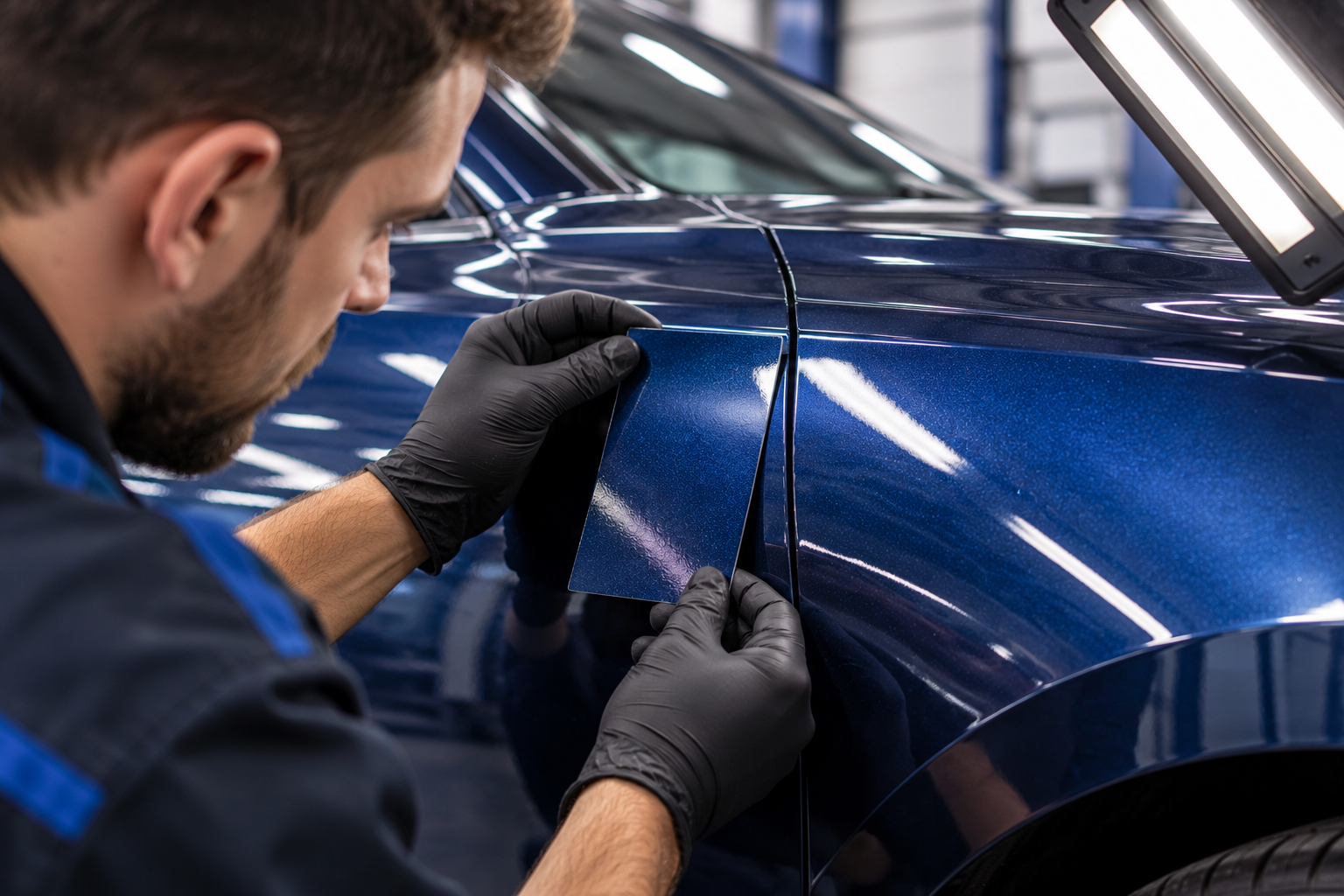
Bentley’s paint is one of the reasons people buy the car. The factory palette is extensive, and personalised colours are common, which means the finish on your car may not be one a standard paint system has ever been asked to mix.
The Technology Behind the Panels
Behind the bumpers, grille, mirrors and windscreen sit cameras and radar sensors supporting features such as adaptive cruise control, lane assist, night vision on some models, and parking systems. These are calibrated to precise positions. Even a modest front-end knock can disturb them, and so can the repair itself.
Why Isn’t Any Good Bodyshop Good Enough for a Bentley?
Plenty of bodyshops do excellent work on mainstream cars. The issue isn’t skill in general — it’s having the specific equipment, materials knowledge and process to repair a car like a Bentley to its manufacturer’s standard.
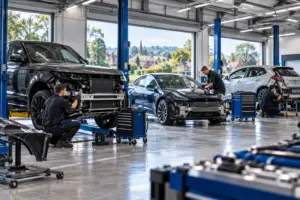
A generalist repairer set up around high volumes of everyday cars may not have a dedicated aluminium repair bay, the correct riveting and bonding equipment, access to Bentley repair methods, or the calibration equipment needed for its driver-assistance systems. Where any of those are missing, the usual results are compromise: a panel replaced with a cheaper alternative, a repair method borrowed from a different material, or calibration skipped or outsourced without proper confirmation.
None of that may be visible at collection. It tends to show up later — in panel gaps that drift, paint that doesn’t quite sit right in sunlight, warning lights, or a car that doesn’t perform as designed in a future collision.
How Should a Bentley Be Repaired After a Crash?
A proper Bentley repair follows the same sequence as any accident repair, but with less margin for error at every stage.
Thorough Damage Assessment
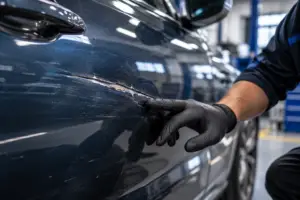
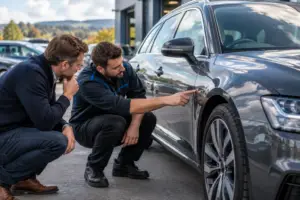
The assessment should look beyond the obvious dent. On a heavy, powerful car, energy from an impact can travel into mounting points, suspension components and structural members some distance from the visible damage. Measuring the body against manufacturer dimensions is the only reliable way to know whether the structure is where it should be.
Genuine Parts as the Default
Original equipment manufacturer (OEM) parts are designed for the car’s materials, fit and crash behaviour. On a Bentley, there’s very little case for anything else, particularly on structural components and anything linked to safety systems.
Correct Joining and Material Handling
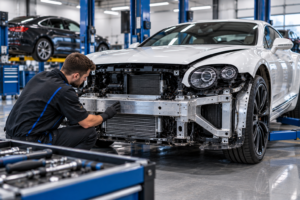
Aluminium work should be carried out with dedicated tools in a segregated area, using the joining techniques specified in the manufacturer’s repair method. Where a panel can be repaired rather than replaced, the technician needs to understand how aluminium responds so the repair doesn’t weaken the metal.
Paint Matched to the Car, Not the Code Alone
A colour code is a starting point, not a guarantee. Factory paint can vary subtly between batches, and a car’s finish changes with age and exposure. A specialist refinisher will measure the existing paint, create test panels, and blend where appropriate so the repair is invisible from every angle and in every light.
ADAS Recalibration and Final Checks
Once bodywork is complete, cameras and radar sensors should be recalibrated to the manufacturer’s specification and the results documented. A final inspection checks panel gaps, paint, lighting, electrics and calibration before the car is handed back.
What Happens to the Interior After a Bentley Collision?
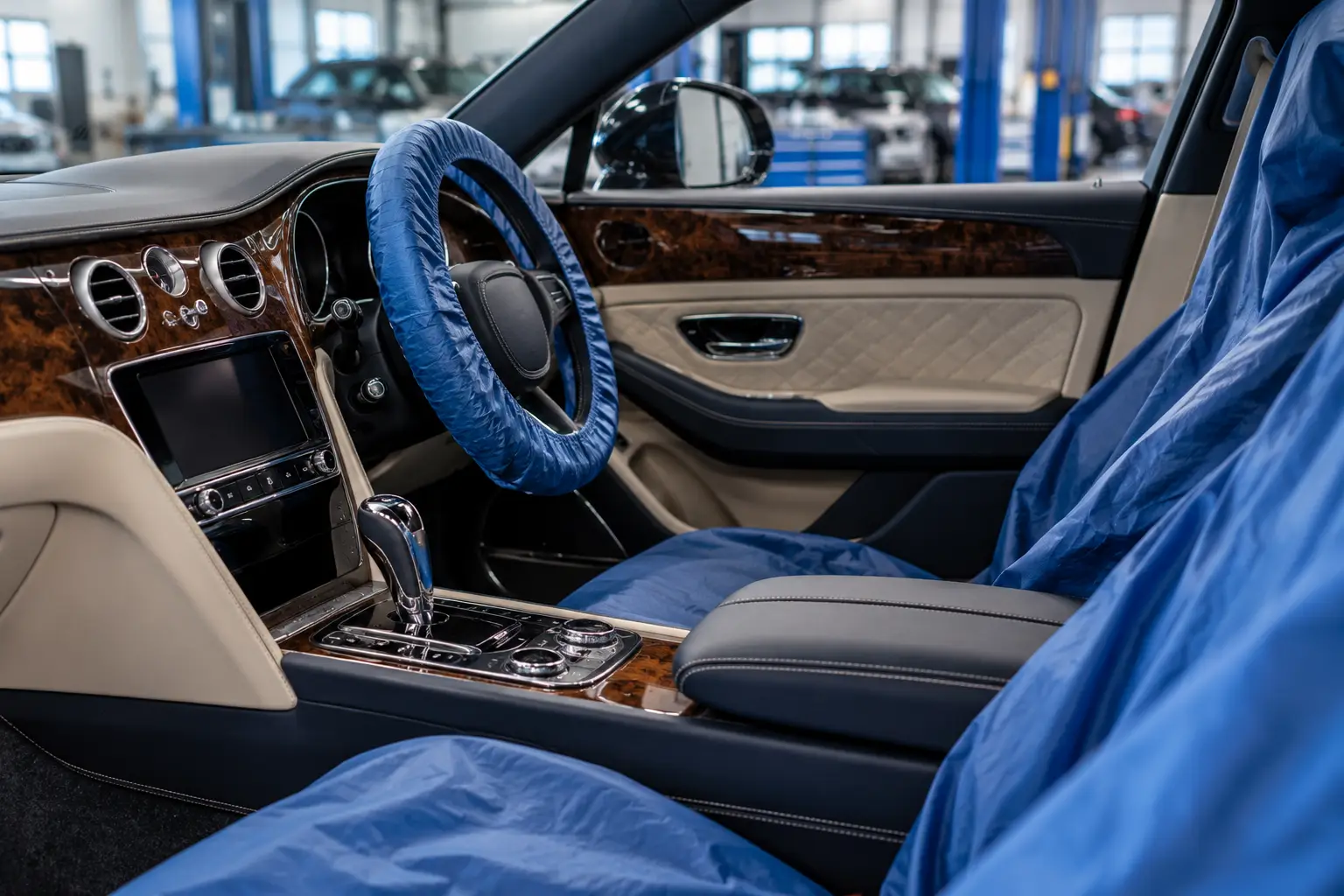
Bodywork is only part of the story. A collision can also affect a Bentley’s cabin: airbag deployment may damage trim, leather and veneers; glass can shower the interior; and seats or panels may need removing to access the damaged structure behind them.
Bentley interiors are hand-finished, and replacing or repairing trim needs as much care as the paintwork. Any repairer working on the car should explain how interior components will be protected during the repair and, where they’re damaged, how they’ll be repaired or replaced to match.
Do You Have to Use Your Insurer’s Choice of Repairer for a Bentley?
No. Your insurer can recommend a repairer from its network, but in the UK the choice of who repairs your car sits with you as the policyholder.
For a Bentley, that choice carries real weight. Insurer networks are organised around managing costs across large volumes of claims. That’s a reasonable aim for an insurer, but it isn’t necessarily aligned with a hand-built luxury car that needs specialist methods, genuine parts and time to get right.
The simplest way to protect yourself is to state your preferred repairer when you first report the claim. A bodyshop experienced in insurance work can then deal with the insurer directly on your behalf.
How Long Does a Bentley Repair Take?
It depends on the extent of the damage and, often, on parts. Genuine Bentley components may need ordering in, and paint work on a hand-finished car can’t be rushed if the result is to be invisible. A minor cosmetic repair might be relatively quick; structural work involving aluminium sections, interior trim and full ADAS recalibration will take considerably longer.
A good repairer will give you a realistic timeline at the assessment stage, explain what could change it, and keep you updated rather than leaving you chasing. If you’re making a non-fault claim, ask early about a like-for-like replacement vehicle while yours is off the road.
Protecting Your Bentley’s Value After a Repair
Bentleys hold their appeal partly because buyers trust their quality. A poorly documented repair — or one that a buyer’s inspector can spot — can affect what the car is worth when you come to sell it.
A specialist repair helps protect that value in a few ways: a finish that can’t be detected, panel gaps and structure that measure correctly, and a clear record of the parts used and methods followed. Keep every document from the repair, including confirmation of ADAS calibration. It’s the evidence that the car was put back the way Crewe intended.
FAQ
Why does Bentley bodywork repair need a specialist?
Modern Bentleys use aluminium and mixed-material construction, hand-finished paint and sensitive driver-assistance sensors. Repairing them properly requires manufacturer repair methods, dedicated aluminium equipment, genuine parts, precise colour matching and ADAS recalibration, which many generalist bodyshops are not set up to provide.
Can aluminium Bentley panels be repaired, or do they always need replacing?
Some aluminium panels can be repaired, depending on the type and extent of the damage and the manufacturer’s repair guidance. Aluminium needs dedicated tools, a segregated work area and specific techniques, so the decision should be made by a technician experienced in aluminium repair.
Will my Bentley need ADAS calibration after accident repair?
Often, yes. Cameras and radar sensors in the bumpers, grille, mirrors and windscreen can be disturbed by a collision or by the repair itself. Recalibration to manufacturer specification should be carried out and documented before the car returns to the road.
Can I choose my own repairer for my Bentley if my insurer suggests another?
Yes. UK policyholders can choose their own repairer even when their insurer recommends a network garage. Telling the insurer your preference when you first report the claim is the simplest way to keep control of the repair.
Does Crash Specialist Garage repair Bentleys?
Yes. Crash Specialist Garage is a BSI-approved accident repair bodyshop in Macclesfield that repairs 15 marques, including Bentley, to manufacturer standards, with in-house ADAS recalibration and support through the insurance claim.
A Car Built by Hand Deserves a Repair to Match
A Bentley is engineered and finished to a standard most cars never approach. Its repair should be held to the same standard: proper assessment, genuine parts, correct material handling, a paint finish nobody can find, and safety systems recalibrated and confirmed.
If your Bentley has been damaged, contact Crash Specialist Garage in Macclesfield to arrange an assessment with a BSI-approved bodyshop that knows what the car needs.