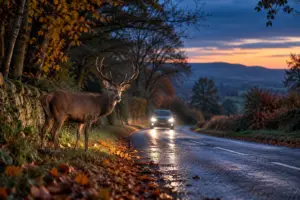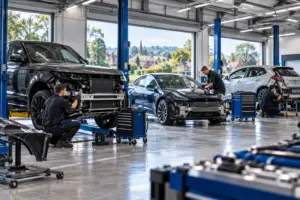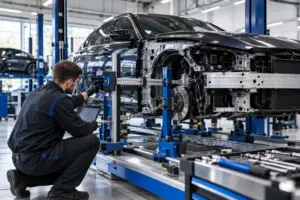
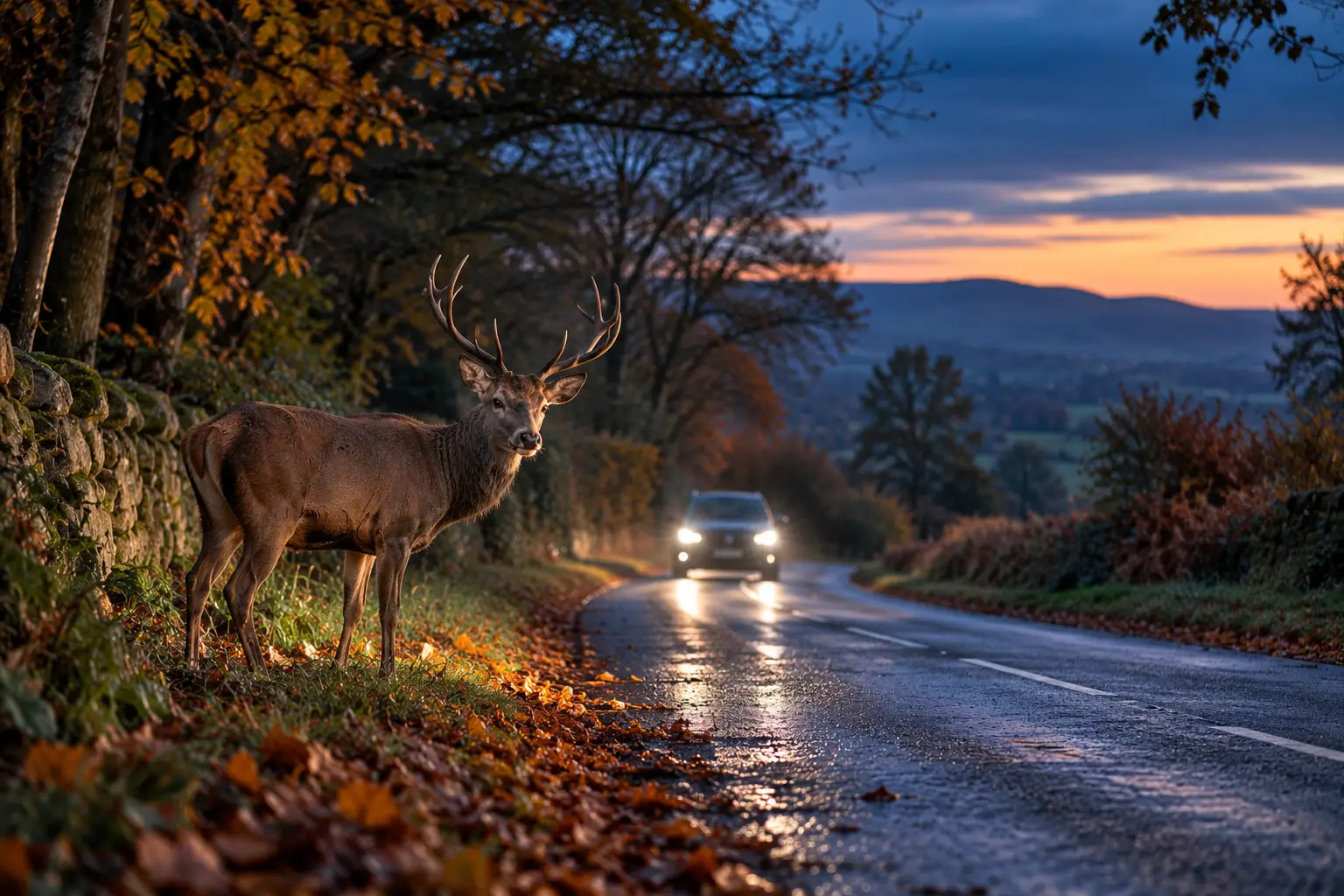
Anyone who drives the lanes around Macclesfield, Prestbury or the edge of the Peak District at dusk in October knows the moment: a shape at the verge, a flash of eyes in the headlights, and a hard press on the brake.
Deer collisions in Cheshire rise in autumn because October and November are the deer rutting season, when animals move more and less predictably, and because the clocks going back puts the evening commute into darkness at exactly the time deer are most active. Wet leaves and early fog add to the risk on rural roads.
Here’s why the risk peaks now, how to reduce it, and what to do — for yourself and your car — if the worst happens.
Why Are Deer Collisions More Common in Autumn?
Several factors line up between October and December, and together they explain why wildlife collisions cluster in these months.
The Rut
Autumn is the breeding season for several UK deer species, including red and fallow deer. During the rut, males in particular range more widely, are less cautious and may chase or follow other deer across roads. Where one deer crosses, another often follows.
The Clocks Go Back
British Summer Time ends on the last Sunday of October — 25 October in 2026. Overnight, the evening drive home moves into dusk and darkness. Deer are most active around dawn and dusk, so the change pushes peak commuter traffic straight into peak deer movement.
Shorter Days and Poorer Visibility
Low sun in the morning, early darkness in the afternoon, and patches of mist rising off fields all reduce how early you see an animal. A deer standing on a dark verge can be almost invisible until it moves.
Food and Cover
Autumn is also when deer feed heavily ahead of winter, moving between woodland cover and open fields to graze. Many rural roads run right along those boundaries.
Where Are Wildlife Collisions Most Likely Around Macclesfield?
East Cheshire has a mix of parkland, woodland and open farmland that suits deer well. Lyme Park, near Disley, and Tatton Park, near Knutsford, both have long-established deer herds, and wild deer are found more widely across the surrounding countryside and along the edge of the Peak District.
The higher-risk roads tend to share a few features:
- Unlit rural roads with woodland or high hedgerows on one or both sides
- Roads through or alongside parkland and estates
- Routes climbing towards the hills east of Macclesfield, where woodland and moorland meet farmland
- Stretches with deer warning signs — they’re placed where crossings are known to happen
Deer aren’t the only hazard. Badgers, foxes, pheasants and other game birds are all common on Cheshire’s lanes in autumn, and swerving to avoid a smaller animal can cause a more serious accident than hitting it.
How Can You Reduce the Risk of Hitting a Deer?
You can’t eliminate the risk, but you can reduce it considerably.
- Slow down on rural roads at dawn and dusk, particularly where there are deer warning signs. Lower speed gives you more time to react and reduces impact energy if you can’t avoid a collision.
- Use full beam when it’s safe, dipping for oncoming traffic. It lights up verges and reflects from animals’ eyes earlier.
- Expect more than one. If a deer crosses, slow down and wait — others may follow.
- Brake firmly in a straight line rather than swerving. Swerving into oncoming traffic, a tree or a ditch is often far more dangerous than the collision you’re trying to avoid.
- Don’t rely on the horn alone. It may startle an animal, but its reaction is unpredictable.
- Keep your windscreen and lights clean so nothing reduces what you can see.
Many modern cars have driver-assistance systems that can help, such as autonomous emergency braking or night vision. They’re valuable, but they aren’t designed to replace attention, and their effectiveness with animals varies. [INTERNAL LINK: “how cameras, radar and sensors work together” → /how-cameras-radar-and-sensors-work-together-in-a-modern-adas-system/]
What Should You Do If You Hit a Deer?
Make Yourself Safe
Stop as soon as it’s safe, switch on your hazard lights and check whether anyone in the car is injured. If the car is in a dangerous position, move it if you can do so safely, and get passengers out of the car and away from traffic.
Don’t Approach an Injured Deer
An injured deer is frightened and can be dangerous; antlers and hooves can cause serious injury. Keep your distance.
Report It
If the animal is causing a hazard on the road or is injured, call the police on 101, or 999 if there’s an immediate danger to road users. Under the Road Traffic Act, accidents involving certain animals — such as dogs, horses, cattle, sheep, pigs and goats — must be reported to the police. Deer aren’t on that list, but reporting a deer collision is still strongly advised where it presents a hazard.
Record Everything
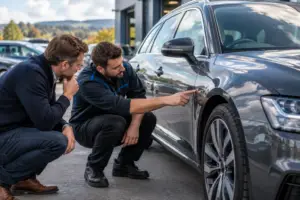
Take photos of the scene, the damage to your car and the road conditions if it’s safe to do so. Note the time, location and any witnesses. This will help with any insurance claim.
What Damage Does a Deer Collision Usually Cause?
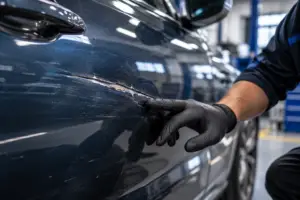
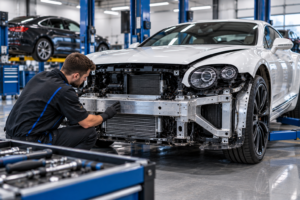
A deer weighs considerably more than people expect, and even a low-speed impact can do more harm than it first appears. Typical damage includes:
- Front bumper, grille and bonnet — often crushed or cracked
- Headlights and fog lights — frequently broken
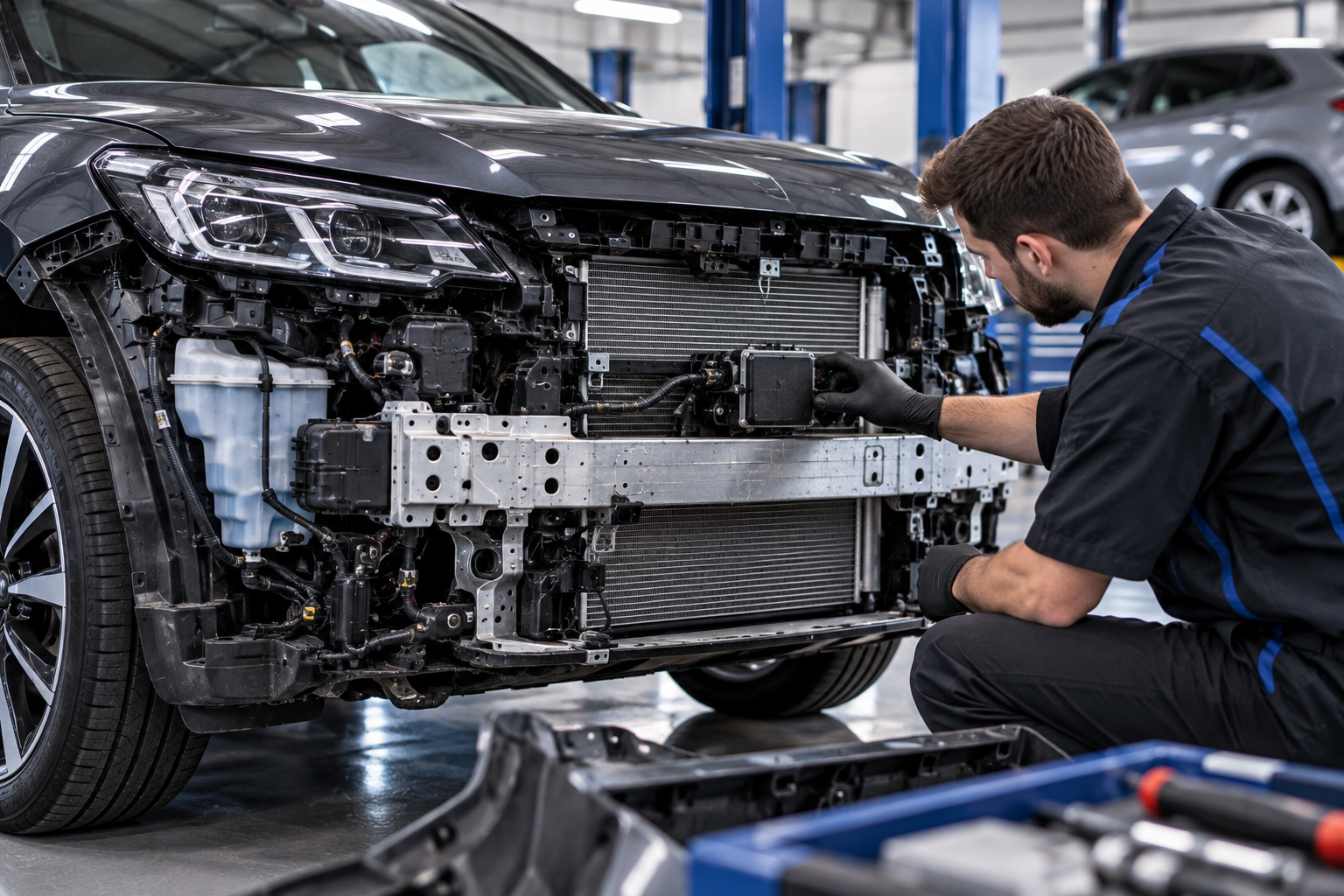
- Radiator, condenser and cooling system — damaged behind the bumper, which can cause overheating if you continue driving
- Windscreen — if the animal is thrown upwards
- ADAS cameras and radar sensors — mounted in the grille, bumper and windscreen, these can be knocked out of alignment
That last point is the one many drivers don’t consider. A car that seems to drive normally after a collision may have a front radar or camera that’s misaligned, affecting adaptive cruise control, lane assist or emergency braking. Any repair should include checking and recalibrating these systems.
Is It Safe to Keep Driving After Hitting an Animal?
Often it isn’t, even if the car seems fine. A damaged radiator can lose coolant quickly and lead to engine overheating. Broken headlights reduce your visibility and make you harder to see. Front sensors knocked out of position may trigger warning lights or, worse, stop safety features working without any obvious sign.
If there’s any fluid leaking, a warning light on the dashboard, a broken light, or the bonnet won’t close properly, arrange recovery rather than driving on. It’s better to have the car assessed before a small problem becomes an expensive one.
Will Insurance Cover a Collision With a Deer?
Generally, damage from hitting a deer or other wild animal is covered under a comprehensive policy rather than third-party only cover. Because there’s no third party to claim against, it’s often treated as a fault claim, which can affect your no-claims discount.
Check your policy wording, and remember that you can choose where your car is repaired. If your car is a prestige model, or has complex front-end sensors, choosing a bodyshop that can carry out manufacturer-standard repairs and calibration in-house is worth insisting on.
FAQ
Why are there more deer collisions in autumn?
Autumn brings the deer rutting season, when deer move more widely and less predictably. The clocks going back at the end of October also puts the evening commute into darkness at dusk, when deer are most active, increasing the chance of a collision.
What should I do if I hit a deer in Cheshire?
Stop safely, switch on hazard lights and check for injuries. Do not approach an injured deer. If the animal is causing a hazard or is injured, call the police on 101, or 999 in an emergency. Photograph the scene and damage for your insurer.
Do I have to report hitting a deer to the police?
Deer are not among the animals listed in the Road Traffic Act for mandatory reporting, but reporting a deer collision to the police is strongly advised where the animal is injured or creating a hazard on the road.
Should I swerve to avoid a deer?
Generally no. Braking firmly in a straight line is usually safer than swerving, which can lead to hitting oncoming traffic, a tree or a ditch, causing a more serious accident than the collision with the animal itself.
Can a deer collision affect my car’s safety systems?
Yes. Front-mounted cameras and radar sensors can be knocked out of alignment, affecting features such as emergency braking and adaptive cruise control. They should be checked and recalibrated as part of the repair.
Drive for the Season — and Get Help If It Goes Wrong
Autumn is one of the most beautiful times to drive in East Cheshire, and one of the riskiest for wildlife collisions. A little extra caution at dawn and dusk makes a real difference.
If you do hit a deer or other animal, Crash Specialist Garage in Macclesfield can assess and repair the damage to manufacturer standards, including ADAS recalibration, and support you through the insurance claim