A previously repaired car isn’t automatically a bad buy. A properly repaired one can be every bit as good as a car that’s never had a scratch. The problem is the repairs you don’t know about — and the ones that weren’t done properly.
To spot previous repair work on a used car, check panel gaps for uneven spacing, look along the bodywork for colour or texture differences, inspect for overspray on seals and trim, examine bolts for tool marks, compare glass and component dates, and use a paint depth gauge. Then ask for full repair paperwork.
None of those checks needs specialist knowledge to start with. Here’s what to look for, why it matters, and when to bring in a professional.
Why Does Previous Repair Work Matter?
Every year, a large number of cars on UK roads are repaired after accidents. Many go back to the road in excellent condition. Some don’t: corners cut on parts, structure not properly measured, or safety sensors left uncalibrated.
As a buyer, the issue isn’t whether a car has been repaired. It’s whether you know about it, whether the repair was carried out to the manufacturer’s standard, and whether the price reflects the car’s history. A poorly repaired car may have hidden structural weakness, future corrosion, ADAS faults or a lower resale value than you expect.
What Are the Visual Signs of Previous Repair Work?
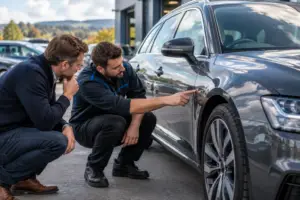
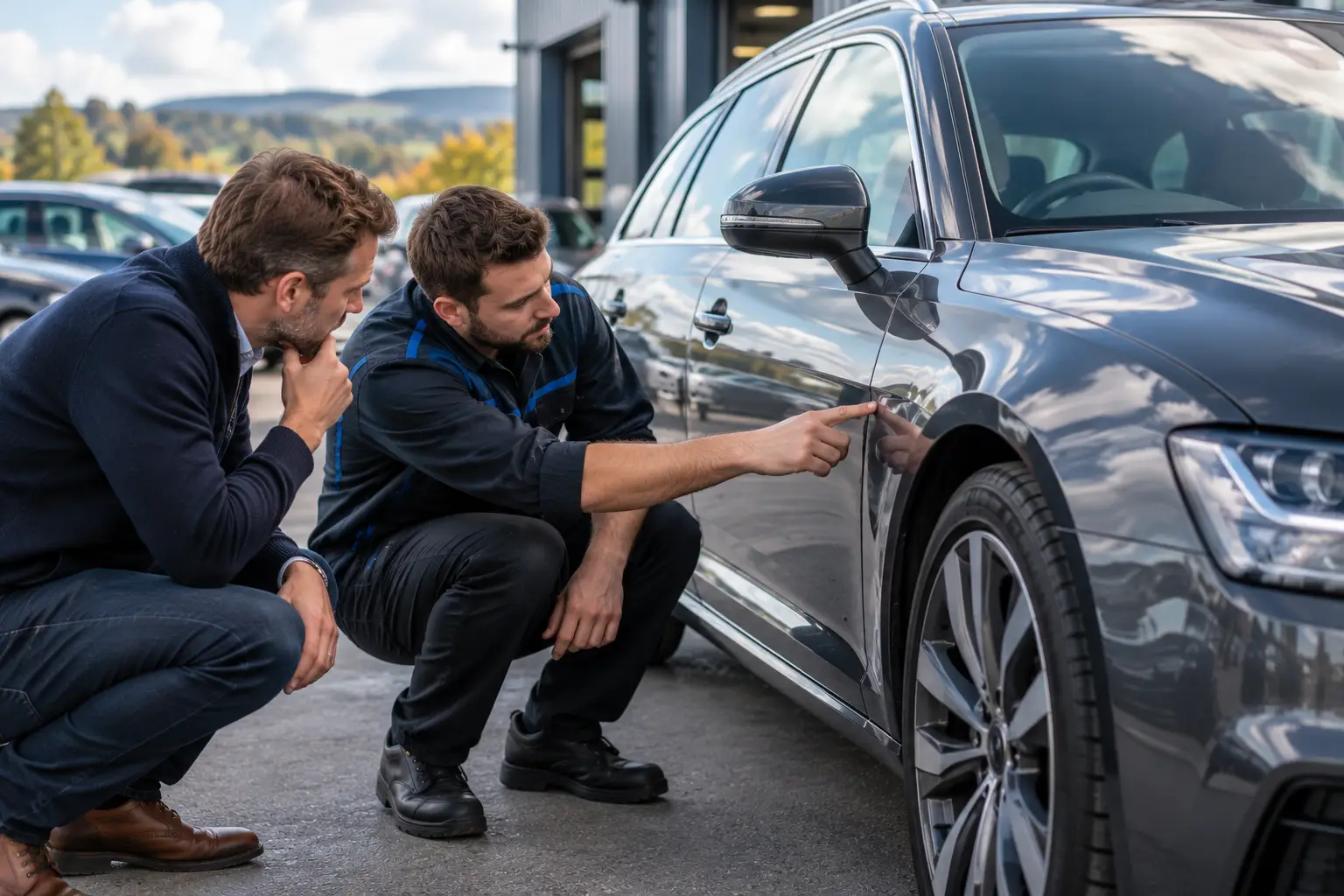
Look at the car in good, even daylight, ideally on a dry day. Rain, low sun and dim forecourt lighting all hide imperfections. Walk all the way round, then crouch down at each corner and look along the sides.
Uneven Panel Gaps
Factory panel gaps are consistent. Check the spacing between the bonnet and wings, doors and body, and boot lid and rear quarters. If the gap is noticeably wider on one side than the other, or tapers along its length, a panel may have been replaced, refitted or the structure beneath disturbed.
Paint Colour and Texture Differences
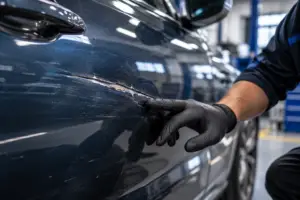
Sight down the side of the car at a shallow angle. Look for one panel that’s slightly lighter, darker or a different tone, especially on metallic and pearlescent colours. Then look at the reflections: factory paint usually has a consistent, fine texture. A repaired panel may show more “orange peel” texture, or be noticeably smoother, than its neighbours.
Overspray
Open the doors, bonnet and boot. Check rubber seals, plastic trim, badges, window rubbers and wheel arch liners for tiny specks or a fine haze of paint. Overspray is a strong sign that part of the car has been refinished — and that masking wasn’t as careful as it should have been.
Masking Lines and Paint Edges
Look in door shuts, around the edges of the bonnet and under the boot lip. A hard line where paint stops abruptly, or a ridge of paint, often marks where a panel was masked for respraying.
Filler Clues
Run your hand lightly along panels, particularly lower doors, sills and wheel arches. Ripples, waviness or a slightly different feel can indicate body filler beneath. A small fridge magnet wrapped in a cloth can help on steel panels, as it may hold less firmly over thick filler — though this won’t work on aluminium or composite panels.
What Should You Check Under the Bonnet and Boot?
Some of the most telling signs of repair work are hidden from the outside.
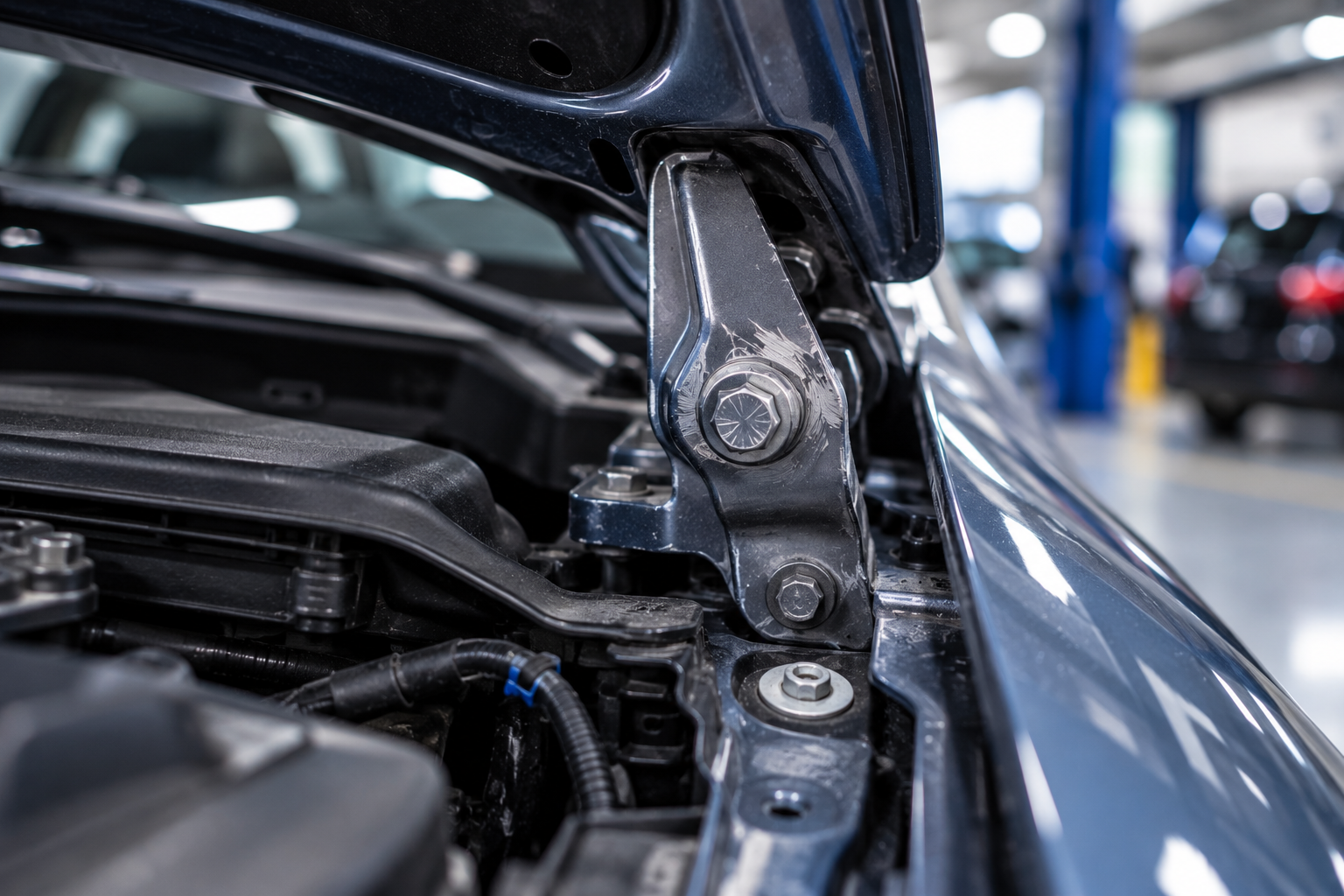
- Bolts and fixings — the bolts holding wings, bonnet hinges and the front panel often have factory paint on them. Scratched paint or spanner marks suggest the part has been removed.
- Inner wings and chassis legs — look for creasing, welding marks or fresh seam sealer that looks different from the factory finish.
- Spare wheel well and boot floor — check for rippling, water, rust or signs of welding, which can point to a rear-end impact.
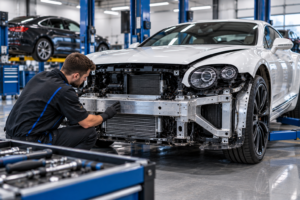
- Radiator support and crash structure — a mismatched colour, newer-looking parts or non-genuine labels can indicate frontal repair.
What Do Glass and Component Dates Tell You?
Most car glass carries a small manufacturer’s mark that includes a date code. If every window on a car shows a similar date and one is clearly different, that window has been replaced — perhaps after a break-in, perhaps after an accident.
The same logic applies to headlights, seatbelts and some other components. Different dates don’t prove an accident, but they give you a reason to ask more questions.
How Does a Paint Depth Gauge Reveal Repairs?
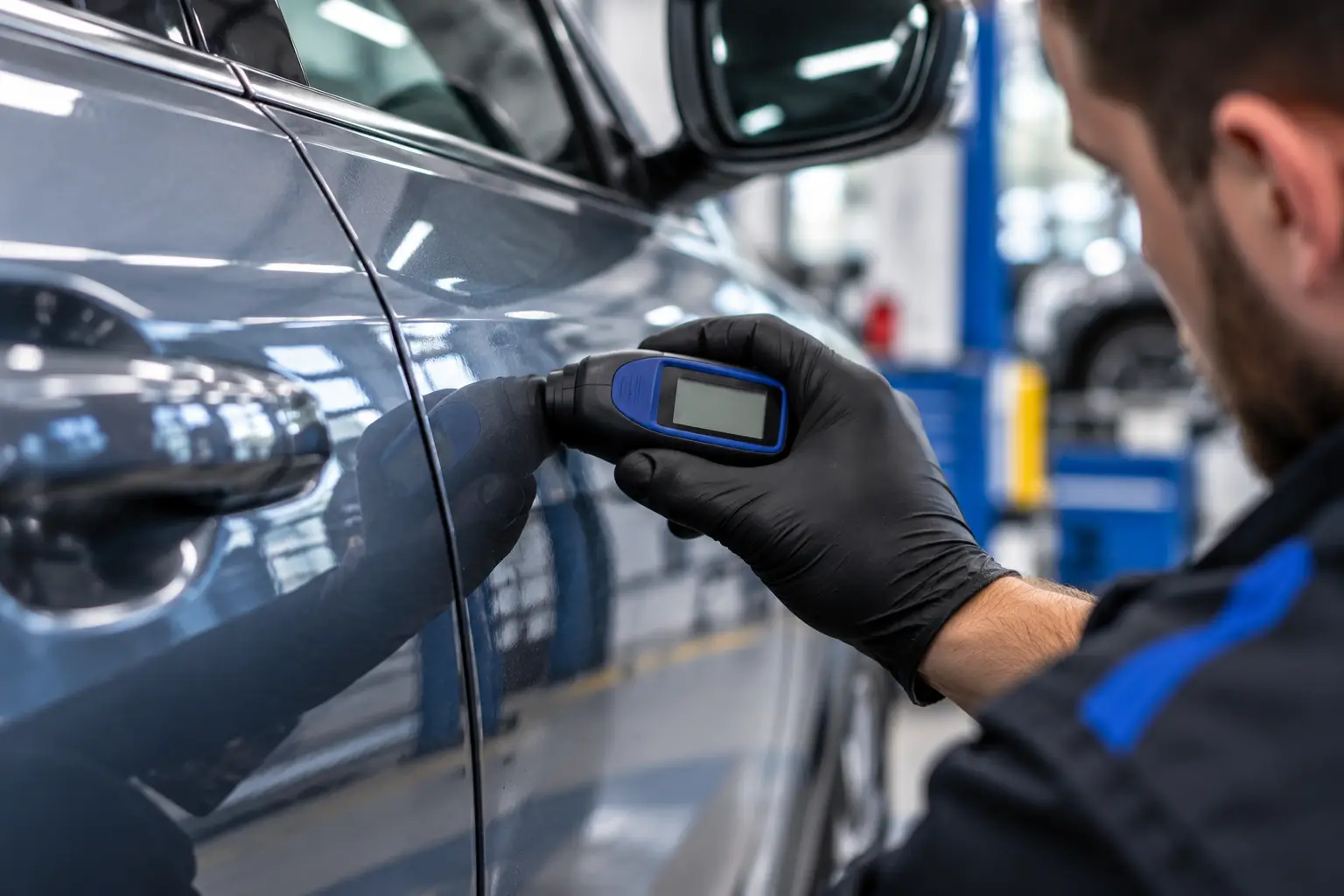
A paint depth gauge measures the thickness of paint on a panel. Factory paint tends to be fairly consistent across a car. A panel with noticeably thicker readings has probably been refinished, and very high readings may suggest filler beneath.
Gauges are relatively inexpensive and simple to use, which is why many professional inspectors carry one. Take several readings across each panel and compare like with like. Note that gauges for steel panels may not read aluminium or plastic.
What Won’t a Vehicle History Check Tell You?
A history check can show whether a car has been recorded as an insurance write-off, including the current Category S and Category N markers, and may flag outstanding finance or mileage discrepancies. It’s essential, but it has limits.
Many repairs never appear on a history check at all — particularly those paid for privately or settled without a write-off. Even when a car does carry a write-off category, the check won’t tell you who repaired it or how well.
Do Warning Lights Point to Previous Repairs?
Switch the ignition on and check the dashboard. Warning lights for airbags, emergency braking, lane assist or parking sensors can indicate a repair where sensors weren’t refitted or recalibrated correctly. Test the driver-assistance features on the test drive where it’s safe to do so, and be wary of any that are disabled or behave oddly.
Which Questions Should You Ask the Seller?
Direct questions often reveal more than an inspection.
- Has the car ever been in an accident or had bodywork repaired?
- Who carried out the repair, and do you have the invoice?
- Were genuine manufacturer parts used?
- Were ADAS cameras and sensors recalibrated after the repair, and is there confirmation?
- Was it an insurance repair, and was the car ever categorised as a write-off?
A seller with a properly repaired car should have paperwork and be happy to share it. Vague answers, or reluctance to let you inspect the car closely, are worth noting.
Should You Get a Professional Inspection Before Buying?
For a prestige or high-value car, yes. An independent inspection by a qualified engineer or an experienced bodyshop can check alignment, measure paint depth properly, identify non-genuine parts and assess whether driver-assistance systems are working as intended.
The cost of an inspection is usually small compared with the cost of discovering a poorly repaired structure, or a sensor fault, after you’ve bought the car.
Is a Professionally Repaired Car Still Worth Buying?
Often, yes. A car that’s been repaired by a reputable, accredited bodyshop to manufacturer methods, with genuine parts and documented ADAS calibration, can be a sound purchase — and sometimes better value than an equivalent car with no recorded history.
The key is evidence. The more you know about how a car was repaired, the more confidently you can buy it, and the more fairly you can negotiate on price.
FAQ
How can I tell if a used car has had bodywork repairs?
Check for uneven panel gaps, slight colour or texture differences between panels, overspray on seals and trim, tool marks on bolts, and mismatched glass date codes. A paint depth gauge can also show which panels have been refinished.
Will a vehicle history check show all previous accident repairs?
No. A history check shows insurance write-off categories, outstanding finance and some mileage issues, but many repairs, especially privately paid ones, never appear. It also cannot tell you how well a car was repaired.
Is it bad to buy a car that has been repaired after an accident?
Not necessarily. A car repaired properly by an accredited bodyshop using manufacturer methods and genuine parts can be a sound purchase. Ask for repair invoices and confirmation of any ADAS recalibration before buying.
What paperwork should come with a repaired car?
Ideally, the repair invoice or estimate, details of the bodyshop that carried out the work, a list of parts used, and written confirmation that any ADAS cameras and sensors were recalibrated after the repair.
Who repairs prestige cars to manufacturer standard in Cheshire?
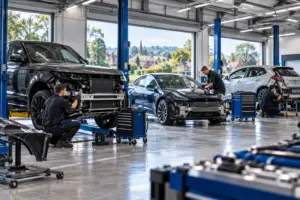
Crash Specialist Garage is a BSI-approved accident repair bodyshop in Macclesfield that repairs 15 marques, including Aston Martin, Bentley, Porsche, Range Rover and Tesla, to manufacturer methods with in-house ADAS recalibration.
Buy With Your Eyes Open
A repaired car can be a good car. What matters is knowing its history, checking the quality of the work, and making sure the price reflects what you’ve found.
If you’ve bought a car and later suspect a previous repair wasn’t done properly, Crash Specialist Garage in Macclesfield can assess it and advise on putting it right.