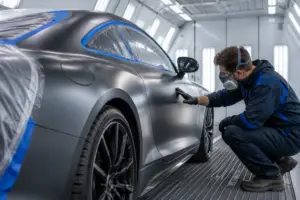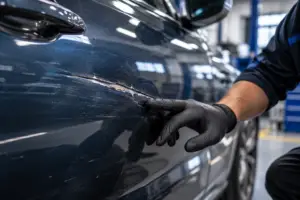

Matte and satin paint have moved from show cars to showrooms. Several prestige manufacturers now offer them as factory options, and they look superb — right up until something scrapes, dents or chips them.
Matte paint repair is harder than gloss because matte and satin finishes can’t be polished, blended or spot-repaired in the usual way. Their flat sheen comes from a textured clear coat that must be applied evenly across a whole panel, so repairs usually mean refinishing complete panels with exact sheen matching — specialist work with little margin for error.
If you own a car with a matte or satin finish, understanding why repairs are different will help you avoid a costly mistake — and know what to ask any bodyshop before it starts work.
What Makes Matte and Satin Paint Different From Gloss?
Most modern car paint is built in layers: primer, a coloured base coat, and a clear coat on top. On a gloss car, the clear coat cures to a smooth surface that reflects light evenly, which is what produces the deep, mirror-like shine.
Matte and satin finishes use the same basic structure, but the clear coat is formulated to cure with a microscopically uneven surface. Instead of reflecting light back in one direction, it scatters it. Satin scatters slightly less than matte, which is why it carries a soft sheen rather than a completely flat look.
That textured top layer is the whole point of the finish. It’s also the root of every repair challenge.
Some “Matte” Cars Aren’t Painted Matte at All
It’s worth checking what you’ve actually got. Some cars that look matte are gloss cars finished with a matte vinyl wrap or matte paint protection film. Those are repaired in a completely different way — usually by replacing the film on the affected panel. Your car’s build specification or a specialist inspection will confirm which applies.
Why Can’t You Polish Out a Scratch on Matte Paint?
On a gloss finish, light scratches in the clear coat can often be polished out. Polishing removes a tiny amount of clear coat and levels the surface, so the scratch disappears and the shine returns.
Do that on a matte or satin finish and you flatten the very texture that creates the look. The polished area becomes shinier than the surrounding paint, leaving a glossy patch that’s often more noticeable than the scratch was. Once that’s happened, it can’t be undone by more polishing.
The same applies to many products sold for gloss paint care: compounds, polishes, cutting waxes and some machine-polishing techniques. Even aggressive drying or rubbing at a mark can alter the sheen on a matte panel.
Why Can’t a Matte Repair Be Blended Into the Next Panel?
Blending is one of the most useful techniques in gloss paint repair. The refinisher fades new colour and clear coat gradually into the surrounding paint, so the eye can’t find the edge of the repair.
Matte clear coat doesn’t allow that. The sheen of a matte finish depends on how evenly the clear coat is applied and how it cures. Any variation — a slightly thicker area, an overlap, a faded edge — shows up as a visible change in sheen. A blend line that would be invisible on gloss can stand out as a distinct band on matte.
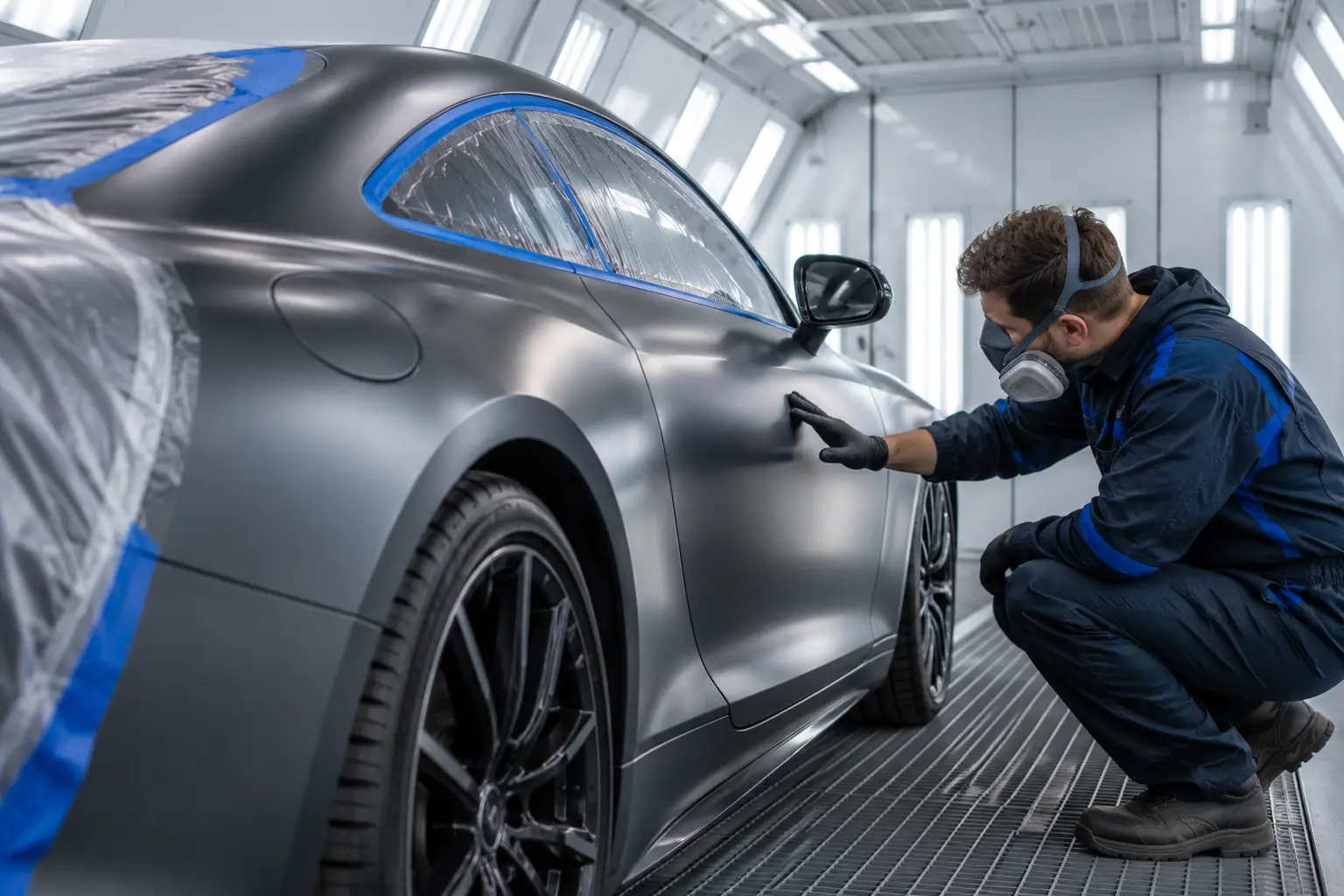
The result is that matte and satin repairs are usually carried out panel by panel. The whole affected panel is prepared and refinished, edge to edge, so the clear coat goes on in one even application. Where damage sits close to a panel join, adjacent panels may also need attention to keep the sheen consistent.
What Does a Proper Matte or Satin Paint Repair Involve?
Repairing a matte finish well comes down to preparation, materials, application and controlled curing. Each step has less tolerance for error than on gloss.
Matching Colour and Sheen
With gloss paint, the main question is colour. With matte, there are two: colour and sheen level. The refinisher has to match the base colour to the car and match the clear coat’s degree of flatness to the surrounding panels. That means using the right manufacturer-approved matte clear and making test panels to compare under different lighting before anything touches the car.
Panel Preparation
Bodywork repairs underneath — filling, shaping, priming — need to be perfectly smooth. Any imperfection under a matte clear can affect how the top layer settles and how light scatters from it.
Even Application
The matte clear must be applied in consistent, even coats across the entire panel. Spray technique, gun settings, flash times between coats and booth conditions all influence the final texture. This is where experience shows.
No Correction Afterwards
On gloss, minor dust nibs or runs can often be corrected after curing by careful flatting and polishing. On matte, those corrections aren’t usually possible without affecting the sheen. If the application isn’t right, the panel generally needs refinishing again. That’s why a clean booth and a skilled refinisher matter so much.
Is Matte Paint Repair More Expensive?
Usually, yes, for the reasons above: more surface area tends to be refinished, specialist materials are used, and the process takes more time and care. A small scratch that might be a local repair on gloss can become a full-panel job on matte.
It’s worth factoring this into insurance conversations too. If your car has a factory matte or satin finish, make sure your insurer and repairer both know from the start, so the estimate reflects the real repair method rather than a gloss-based assumption.
Why Shouldn’t You Use a General Bodyshop for a Matte Finish?
Many bodyshops repair gloss paint to a very high standard and rarely see factory matte cars. The risk isn’t bad intentions; it’s unfamiliarity. Common problems on matte repairs carried out without the right experience include:
- Shiny patches where an area has been polished or over-applied
- Visible sheen differences between a repaired panel and its neighbours
- Blend lines where a gloss technique has been attempted
- Mottling or blotchiness from uneven clear coat application
Each of these usually means the panel has to be refinished again — more time, more cost, and more disruption. Choosing a bodyshop experienced in matte and satin finishes from the outset avoids that.
You also have the right to choose your own repairer under your insurance policy. If your insurer’s suggested garage can’t show experience with factory matte finishes, you’re entitled to take the car elsewhere.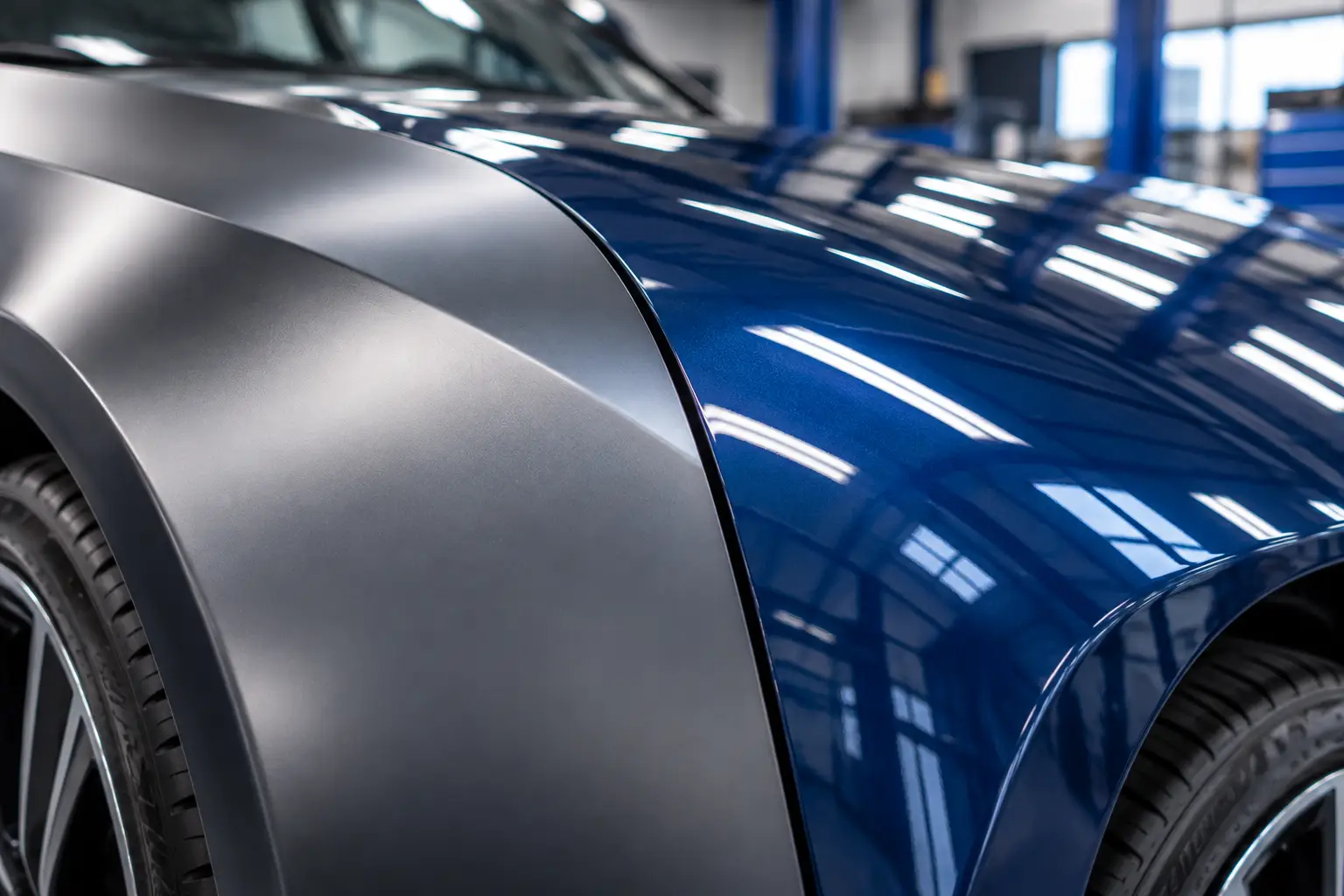
How to Look After a Matte or Satin Finish After Repair
Fresh paint needs time to cure fully, and matte finishes need careful care for life. A few practical guidelines:
- Hand wash using products specifically formulated for matte paint
- Avoid automatic car washes with brushes, and any wax, polish or “shine” products
- Remove bird droppings, tree sap and insect residue promptly, as they can mark the clear coat
- Dab rather than rub when drying or removing spots
- Ask your repairer how long to wait before washing the repaired panel
FAQ
Can matte paint be repaired after a scratch or dent?
Yes, but not in the same way as gloss paint. Matte and satin finishes can’t usually be polished or blended, so the affected panel is normally refinished in full, with the colour and the sheen level both matched to the surrounding paint.
Why can’t you polish matte paint?
Polishing smooths the textured clear coat that gives matte paint its flat appearance. That leaves a shiny patch that stands out from the rest of the panel and can’t be reversed by further polishing.
Is matte paint repair more expensive than gloss?
Usually. Matte repairs often involve refinishing a whole panel rather than a small area, use specialist matte clear coat, and require more time and care to achieve an even sheen, all of which can increase the cost compared with a similar gloss repair.
How do I know if my car has matte paint or a matte wrap?
Check your car’s original build specification or ask a specialist bodyshop to inspect it. A wrap or matte protection film is usually repaired by replacing the film on the affected panel, while factory matte paint needs a full refinishing process.
Does Crash Specialist Garage repair matte and satin finishes?
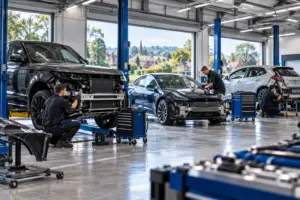
Crash Specialist Garage is a BSI-approved accident repair bodyshop in Macclesfield repairing 15 prestige and everyday marques. Contact the team to discuss your car’s finish and arrange an assessment of the damage.
Getting the Sheen Right as Well as the Colour
A matte or satin finish is a deliberate, premium choice, and it deserves a repair that respects it. That means panel-by-panel refinishing, exact colour and sheen matching, and a refinisher who knows the shortcuts that work on gloss will only cause problems here.
If your matte or satin car has been damaged, contact Crash Specialist Garage in Macclesfield to arrange an assessment before anyone attempts a quick fix.