A dent picked up on the ring road, a wing mirror clipped in a supermarket car park, or something more serious after a shunt on the A50 — however it happened, Knutsford drivers need a repairer they can trust with the outcome, not just the paperwork.
Crash Specialist Garage is a BSI-approved accident repair bodyshop based in Macclesfield, a short drive from Knutsford, working across 15 marques from Aston Martin and Porsche through to Ford, Kia and Volkswagen. Whatever you drive, repairs are carried out to manufacturer standard, including ADAS recalibration, with support through the insurance claims process from first contact to collection.
Where Should Knutsford Drivers Take Their Car After an Accident?
The first instinct after a collision is often to accept whichever repairer your insurer names first. That can work out fine for straightforward, low-value damage. It’s a riskier bet the moment the repair involves structural work, advanced safety sensors, or a car built to tighter tolerances than a mainstream hatchback.
It’s also an unsettling time regardless of how minor the damage looks. Between the insurer’s questions, the courtesy car arrangements and the uncertainty over what the repair will actually involve, it helps to know there’s a specialist nearby who can take that decision off your hands rather than add to the list of things to sort out.
Knutsford sits close enough to Macclesfield that choosing a specialist bodyshop doesn’t mean a long detour or weeks without a car. Crash Specialist Garage’s workshop is a short drive from the town, easily reachable whether you’re heading in from the centre, the A50 corridor, or the roads towards Tatton Park.
Accident repair in Knutsford doesn’t have to mean settling for whichever garage has the shortest queue. It can mean a bodyshop that assesses the damage properly, sources the right parts, and hands the car back in a condition you’d trust for the school run or the motorway alike.
Every Make Welcome: Knutsford’s Mix of Prestige and Everyday Cars
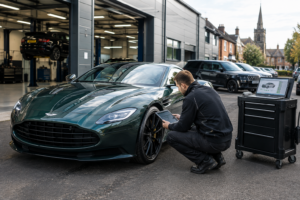
Knutsford’s position near Alderley Edge, Wilmslow and Manchester Airport means a fair number of prestige and performance cars pass through the town on any given day. It’s not unusual to see an Aston Martin, a Porsche or a Range Rover parked outside a café on the high street.
That’s only half the picture, though. Knutsford is also full of family cars doing the school run, work vans parked outside trade premises, and everyday runabouts doing exactly what they’re meant to. A specialist bodyshop isn’t only for the cars with the badges people notice.
Crash Specialist Garage covers 15 marques — Aston Martin, Audi, Bentley, BMW, Ford, Jaguar, Kia, Land Rover, Lexus, Mercedes-Benz, Polestar, Porsche, Range Rover, Tesla and Volkswagen — deliberately spanning both ends of that range. A Kia or a Ford gets the same structural assessment, the same paint-matching care and the same ADAS checks as anything with a more exotic badge on the boot.
If you’ve assumed a specialist repairer is only worth calling for a high-value car, that’s worth reconsidering. The technical standards a modern Ford or Volkswagen needs — sensor recalibration, correct adhesives, manufacturer-specified parts — aren’t far removed from what a prestige marque requires. The car doesn’t need to be expensive for the repair to need doing properly, and you don’t need to own a rare marque to be made welcome at the door.
Specialist Bodyshop or High-Street Chain: What’s the Real Difference?
Not every bodyshop is built the same way, even when the signage outside looks similarly reassuring. The differences tend to show up in three areas: training, parts, and equipment.
A generalist chain repairer is set up to move a high volume of cars through quickly, using processes designed around the most common vehicles on UK roads. That’s a reasonable business model, but it can leave gaps when a car uses aluminium panels, bonded construction, or a sensor layout the technicians rarely see.
A specialist bodyshop tends to differ in a few concrete ways:
- Technician training — marque-specific repair methods rather than generic panel-beating techniques applied across every car that comes through the door.
- Parts sourcing — original equipment manufacturer (OEM) parts as the default position, rather than the cheapest compatible aftermarket alternative.
- ADAS calibration — carried out in-house with manufacturer-specific software and targets, rather than outsourced elsewhere or skipped entirely.
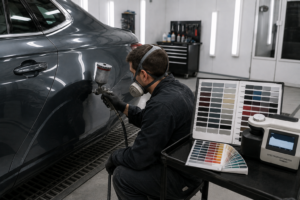
- Paint matching — mixed to the vehicle’s original factory code rather than a close approximation from a standard system.
None of this needs to be taken on trust. It’s reasonable to ask any bodyshop quoting on your car directly about technician training on your marque, whether parts are OEM as standard, and whether ADAS calibration happens in-house. A specialist repairer should answer those questions without hesitation.
Do You Have to Use the Repairer Your Insurer Recommends?
No. Insurers can suggest a repairer from their approved network, and sometimes present it as the default option, but the choice of who repairs your car legally sits with you as the policyholder, not with the insurance company.
This matters more than it might seem in the moment. Insurer networks exist largely to manage cost and turnaround across very high volumes of claims, which is a sensible priority for the insurer but not necessarily the same thing as the best outcome for your specific car.
Making your preference known early in the claims process, ideally at first notification of loss, keeps the decision in your hands. A repairer experienced in insurance work can usually manage the conversation with your insurer directly, so choosing your own bodyshop doesn’t have to mean an argument — just a clear instruction about where you want the work carried out.
What Should You Expect From the Repair Process?
A proper accident repair follows a fairly consistent sequence, regardless of the make or model involved. Knowing the shape of it in advance makes it easier to judge whether a bodyshop is doing the job properly, and easier to ask the right questions if something feels rushed.
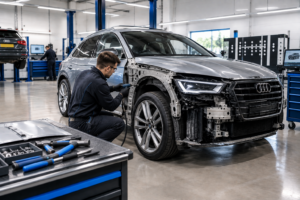
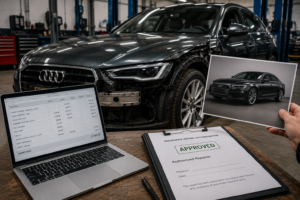
Assessment and Quote. The process starts with a thorough inspection, not just of the visible damage but of anything the impact may have affected underneath — structural components, alignment, and any sensors or cameras built into the bumpers, glass or bodywork. A written quote should follow, itemising the work involved rather than a single vague figure.
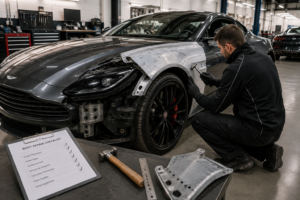
Parts Sourcing and Bodywork. Genuine or manufacturer-approved parts should be the default position, particularly for structural components and anything connected to ADAS. Bodywork and paint then proceed to manufacturer-specified methods — the right welding or bonding technique for the material, and paint matched precisely to the vehicle’s original code.
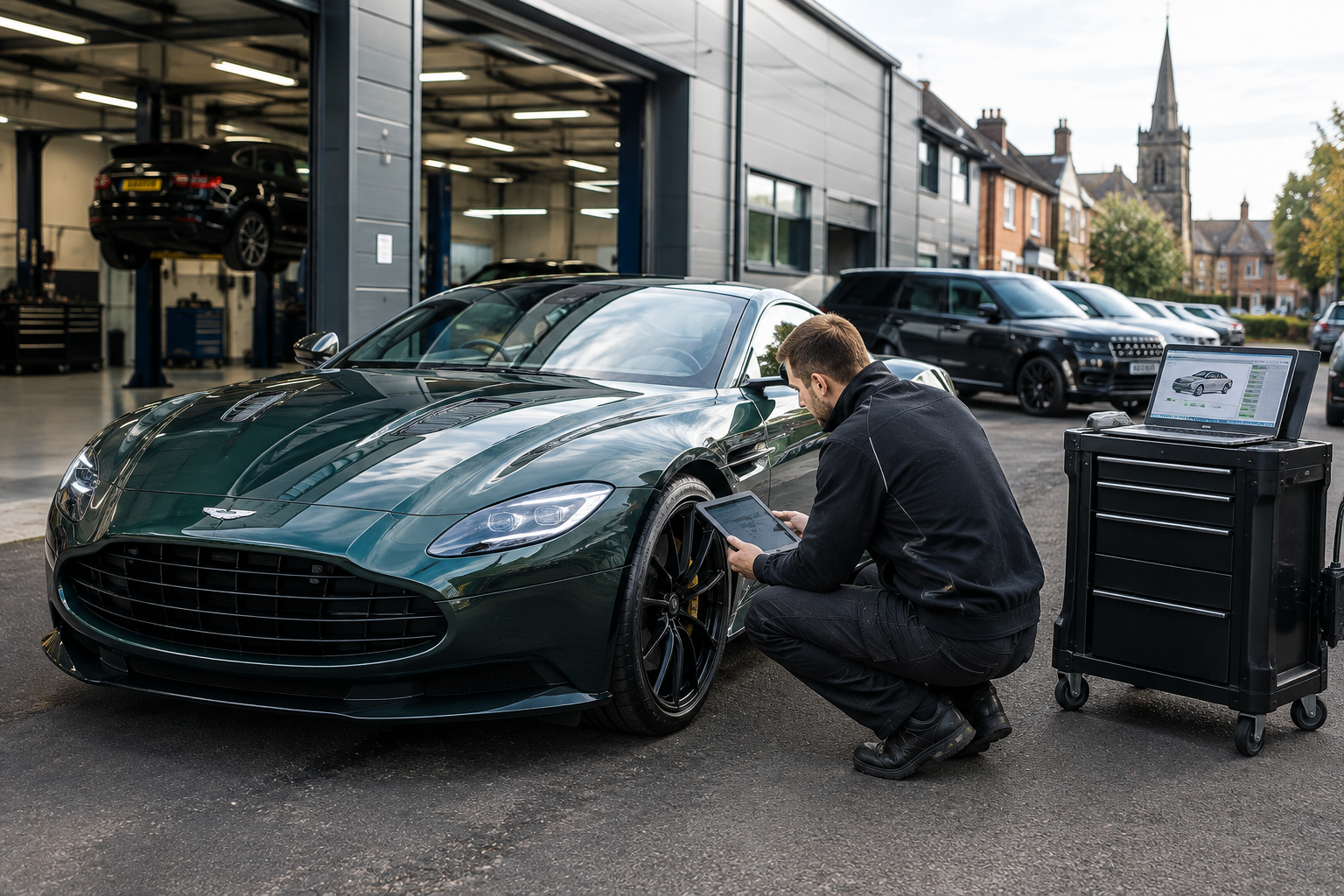
ADAS Recalibration. Most cars built over the last several years rely on cameras and radar sensors to support features like lane-keep assist, automatic emergency braking and parking assistance. Bodywork repair, or even the collision itself, can knock these out of alignment, so recalibration to the manufacturer’s tolerances needs to happen before the car goes back on the road.
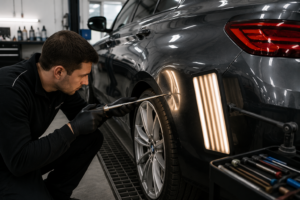
Quality Check and Handover. A final inspection should confirm panel gaps, paint finish and calibration are all correct before the car is handed back. At this point you should receive documentation confirming what work was carried out, including written confirmation that ADAS systems have been recalibrated where relevant.
FAQ
Does Crash Specialist Garage repair cars from Knutsford?
Yes. Crash Specialist Garage is based in Macclesfield, a short drive from Knutsford, and repairs vehicles for drivers across the surrounding Cheshire area, working across 15 marques from prestige brands to everyday makes.
Do I have to use my insurer’s approved repairer if I live in Knutsford?
No. UK policyholders have the right to choose their own repairer, even when an insurer recommends one of its own network garages. Making this preference known early in the claims process keeps the decision in your hands.
Does Crash Specialist Garage only repair prestige or luxury cars?
No. The workshop covers 15 marques, including everyday brands such as Ford, Kia and Volkswagen alongside prestige marques like Aston Martin, Bentley and Porsche. Every vehicle receives the same standard of structural assessment, paint matching and ADAS checks.
What is ADAS calibration and why does it matter after an accident?
ADAS (Advanced Driver Assistance Systems) calibration realigns the cameras and sensors that support features like lane-keep assist and automatic braking. A collision, or the bodywork repair that follows one, can knock these out of alignment, so recalibration to manufacturer tolerances is needed before the car is safely back on the road.
Is Crash Specialist Garage BSI approved?
Yes. Crash Specialist Garage holds BSI approval, an independently assessed accreditation covering quality, process and customer care standards, rather than relying solely on the bodyshop’s own claims about its work.
How do I get a quote for accident repair near Knutsford?
Contact Crash Specialist Garage directly to arrange an assessment of the damage. The bodyshop can also liaise with your insurer on your behalf once you’ve confirmed you want the repair carried out at its Macclesfield workshop.
Bringing Your Car to a Specialist, Wherever It Came From
An accident is disruptive enough without also worrying whether the repair will be done properly. For Knutsford drivers, the choice isn’t between a specialist bodyshop and convenience — Crash Specialist Garage’s Macclesfield workshop is close enough to offer both, whatever badge is on your car.
Prestige marque or everyday runabout, the same standards apply: proper assessment, manufacturer-approved parts, and ADAS recalibration carried out in-house rather than an afterthought. If you’ve had a collision and want an assessment from a BSI-approved bodyshop, get in touch with Crash Specialist Garage to discuss your repair.