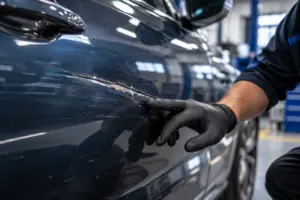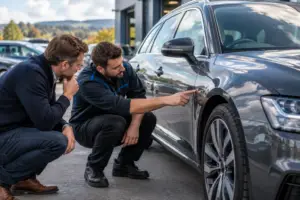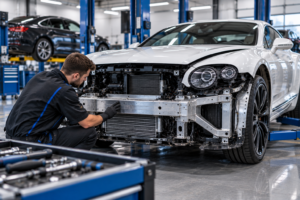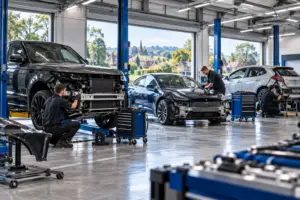
If your car has just come back from accident repair, a clean valet and a shiny finish aren’t proof the job was done properly. A post-repair inspection is how you get that proof.
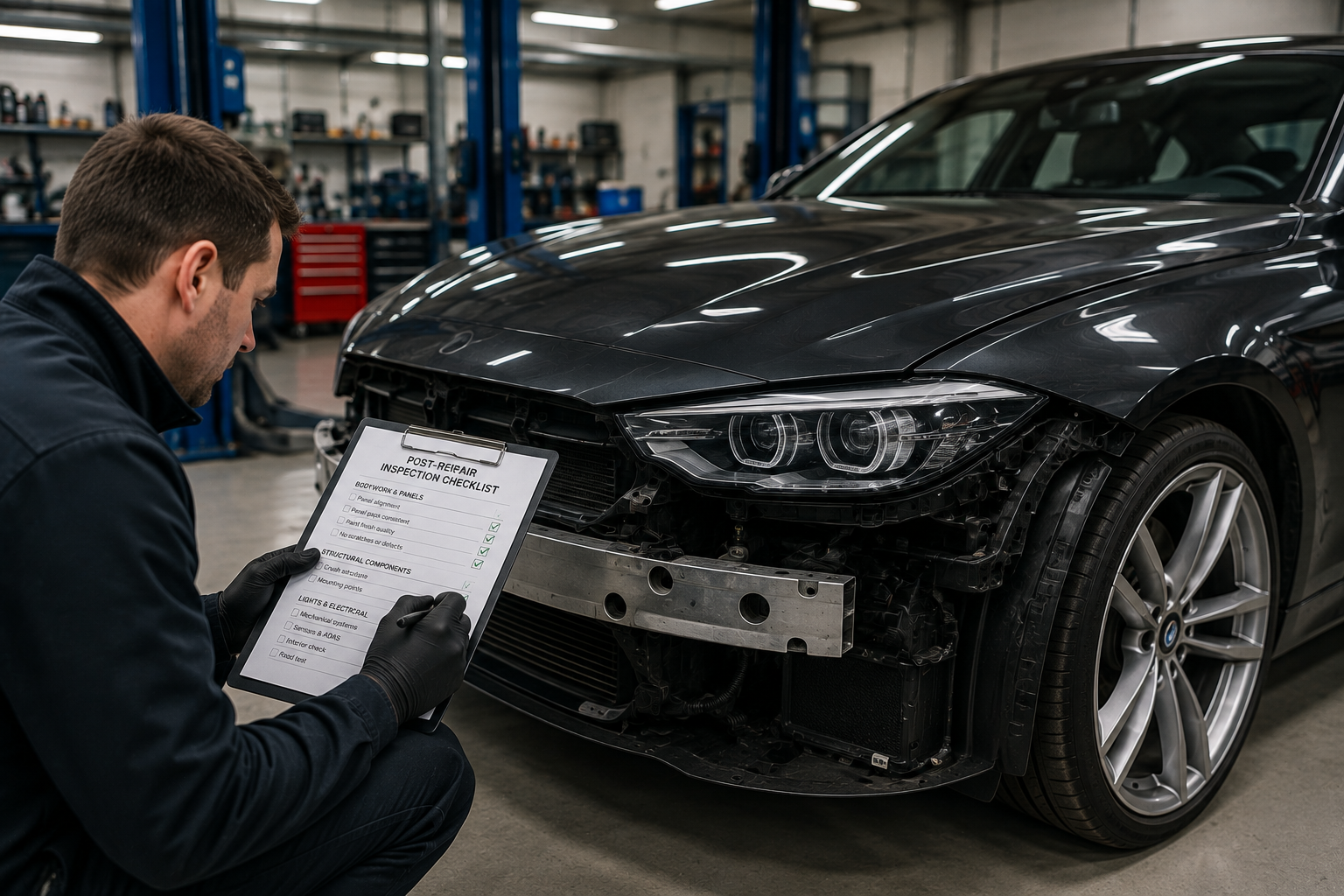
A post-repair inspection is an independent check carried out after accident repair work to confirm the vehicle has been restored to a safe, roadworthy standard. It examines structural alignment, panel fit and gaps, paint finish, ADAS calibration, corrosion protection, and the parts and paperwork used, verifying the repair matches what was authorised.
What Is a Post-Repair Inspection, and Why Does It Matter?
It’s a structured assessment of a vehicle after accident repair work has been completed, carried out separately from the repair itself. It’s a methodical check against the manufacturer’s repair specification, covering everything from chassis alignment to the calibration of driver assistance sensors.
For prestige and specialist vehicles, the stakes are higher than for a typical family car. Aston Martin, Porsche, Range Rover and Bentley bodies use materials and construction methods — aluminium panels, bonded structures, complex sensor arrays — that punish a poorly executed repair in ways that aren’t always obvious to the eye.
It matters most when the repair was arranged through an insurance claim rather than chosen directly. Insurer-approved repair networks work to cost and time targets, and an inspection gives you an independent answer to a simple question: was this car actually put back to standard, or just made to look that way?
What Does the Inspection Actually Check?
Structural and Mechanical Integrity
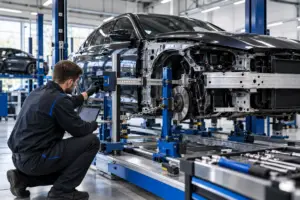
The inspector checks chassis and structural measurements against the manufacturer’s original dimensional data. This confirms the sub-frame, chassis rails and crumple zones sit within tolerance, along with suspension geometry and wheel alignment.
Panel Fit, Gaps and Alignment
Panel gaps should be even, consistent, and match the factory specification for that model, along with the alignment of shut lines and door/bonnet/boot catches.
Paint Finish and Colour Match
Paint is inspected for colour match, evenness of finish, and the absence of defects like orange peel, runs, or overspray on trim and glass.
ADAS Calibration and Safety Systems
Where the repair has affected a bumper, windscreen, mirror, or any component near a sensor location, the inspection confirms that ADAS calibration was carried out and documented.
Corrosion Protection and Sealing
Any area where metal has been cut, welded, or replaced needs proper corrosion protection — seam sealer, cavity wax, and correctly reinstated underseal.
Parts Verification and Paperwork
The inspection checks what was actually fitted against what was authorised, including OEM parts confirmation and calibration certificates.
Who Can Carry It Out?
This should be carried out by a competent, independent assessor — someone with no stake in the original repair’s outcome. A BSI-approved bodyshop working to recognised repair standards should welcome a second opinion on its own work.
Why You Should Request One After Insurance-Led Repair Work
You have the legal right to choose your own repairer after an accident, but many drivers still end up with a vehicle repaired through an insurer’s approved network. An inspection gives you independent confirmation the work meets standard, a documented record if a fault emerges later, and leverage if the repair needs to be revisited.
Conclusion
A post-repair inspection isn’t a sign of distrust in your repairer — it’s a routine, sensible step that confirms a repair has genuinely restored your vehicle to a safe and roadworthy standard. At Crash Specialist Garage in Macclesfield, we carry out post-repair inspections and assessments for owners who want a clear, independent answer on repair quality. Get in touch for a quote or to arrange an inspection.
Frequently Asked Questions
How much does a post-repair inspection cost?
Costs vary depending on the vehicle and the scope of the inspection required, so it’s best to ask Crash Specialist Garage for a quote directly.
How soon after a repair should I get a post-repair inspection?
As soon as possible after collecting the vehicle, and ideally before any further work is carried out on the car.
Will my insurer pay for a post-repair inspection?
This depends on your policy and the circumstances of the claim, particularly if you have genuine concerns about a repair carried out through an approved network.
What happens if the inspection finds a problem?
The inspection report becomes your evidence. You can take it back to the original repairer to request the work is corrected, or escalate through your insurer’s complaints process and, if necessary, the Financial Ombudsman Service.
Can I request a post-repair inspection even if nothing seems wrong?
Yes, and many owners of prestige vehicles do exactly this as standard practice.
Is a post-repair inspection the same as an insurance engineer’s assessment?
Not necessarily. An insurer’s own engineer may inspect a vehicle to validate a claim, but this isn’t the same as an independent post-repair inspection carried out on your behalf.