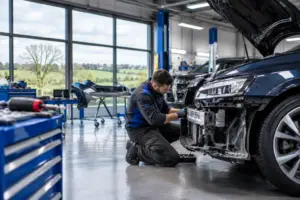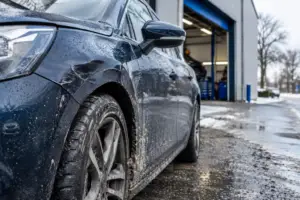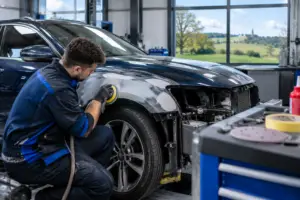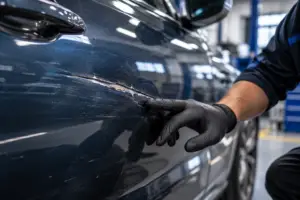

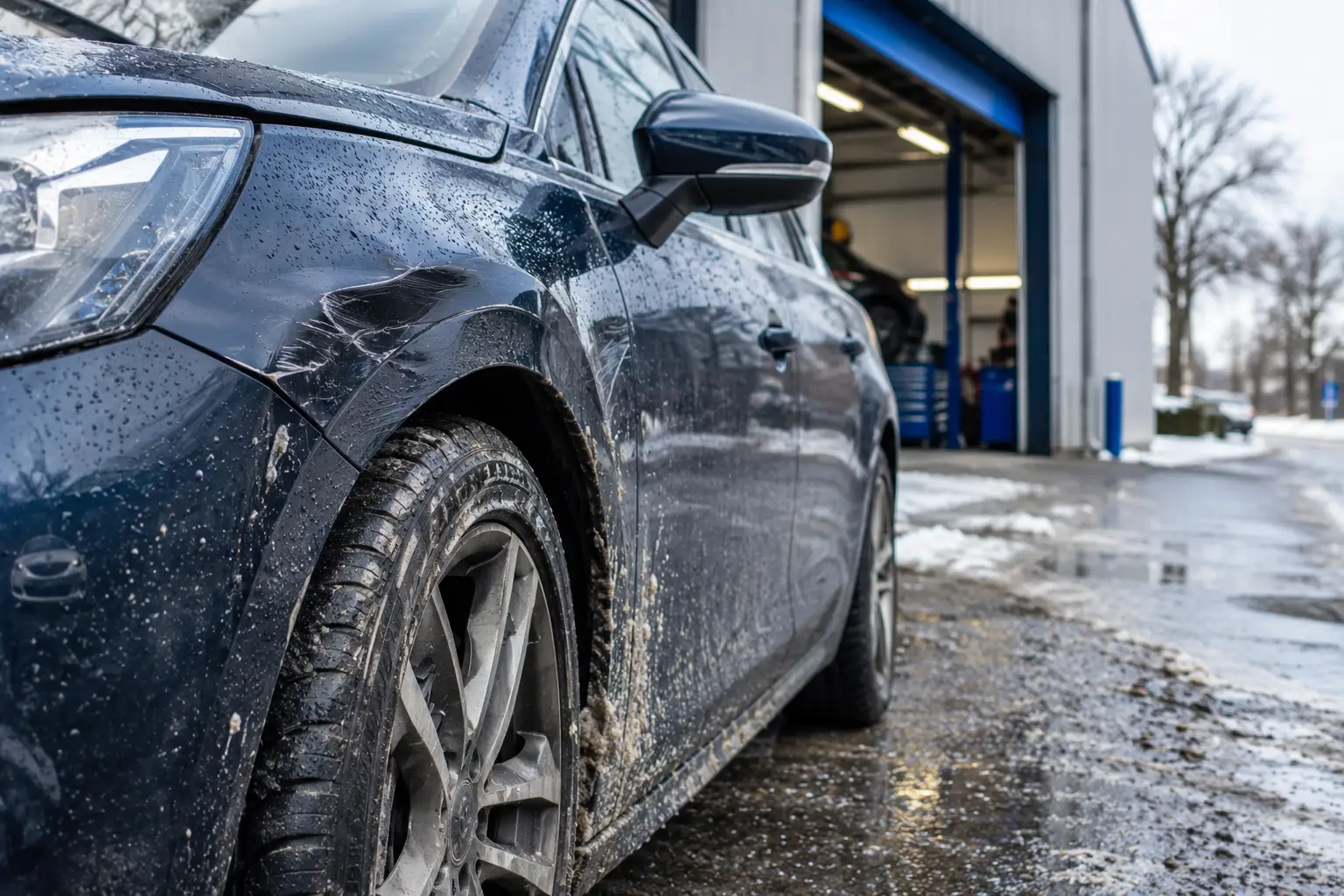
A repair can look flawless in a showroom-bright workshop and still be tested harder by one cold Cheshire January than by the previous six months. Gritted roads, slush and standing water are the real examination for repaired bodywork.
Road salt speeds up corrosion wherever a car’s protective layers are thin, damaged or disturbed, which is exactly where repaired bodywork is most exposed: panel edges, seams, joins and lower panels. A repair that restores paint, sealers and corrosion protection to the manufacturer’s method resists salt far better than one that only restores the finish.
That distinction is the whole subject of this guide. It is written for owners who have had accident repair work done, or are about to, and want to know what winter will ask of it, what a high standard of repair does about that, and what you are entitled to ask your bodyshop before you collect the car.
How Does Road Salt Damage Car Bodywork?
Salt does not rust steel on its own. What it does is make the conditions for rust far more aggressive. Dissolved in water, salt creates a highly conductive solution on the surface of the metal, and that speeds up the electrochemical reaction that turns steel into iron oxide.
Salt also lingers. It collects in the places water collects: seams, crevices, the lips of panels, the area behind a wheel arch liner. A damp, salty film that never fully dries is a far worse environment for metal than a clean rain shower.
In normal use a car is protected in layers. Galvanising or a similar treatment on the steel, then primer, then colour, then lacquer, with seam sealer and cavity wax in the hidden areas. Salt does its damage where one of those layers has been breached by a stone chip, a scratch, a poor join or a repair that did not put every layer back.
That is why repaired bodywork deserves a specific conversation. A repair, by definition, is somewhere the factory finish has been removed and rebuilt by hand.
Why Is Repaired Bodywork More Vulnerable Than Factory Paint?
The factory builds a car in a highly controlled sequence, with the body treated and coated as a whole before it is assembled around. A bodyshop cannot repeat that exact process. It has to rebuild the protection panel by panel, on a car that is already assembled, and the quality of that rebuild is what determines how the repair behaves in winter.
Several things make a repaired area different from an untouched one.
Panel Edges and Joins
Wherever a panel has been replaced, welded, bonded or riveted, there are new edges and seams. Edges are the classic starting point for corrosion because paint tends to be thinnest there and because water and salt creep into them. A good repair seals and coats every one of those edges. A rushed repair coats what can be seen.
Hidden Cavities and Box Sections
Sills, door skins, rear quarters and structural members are hollow. After a repair, the inside of those sections needs its corrosion protection restored, usually with cavity wax, because the original protection has been burned off or disturbed by welding and cutting. This is the area where a visually perfect repair can quietly fail, since nobody sees the inside of a sill.
Lower Panels and Wheel Arches
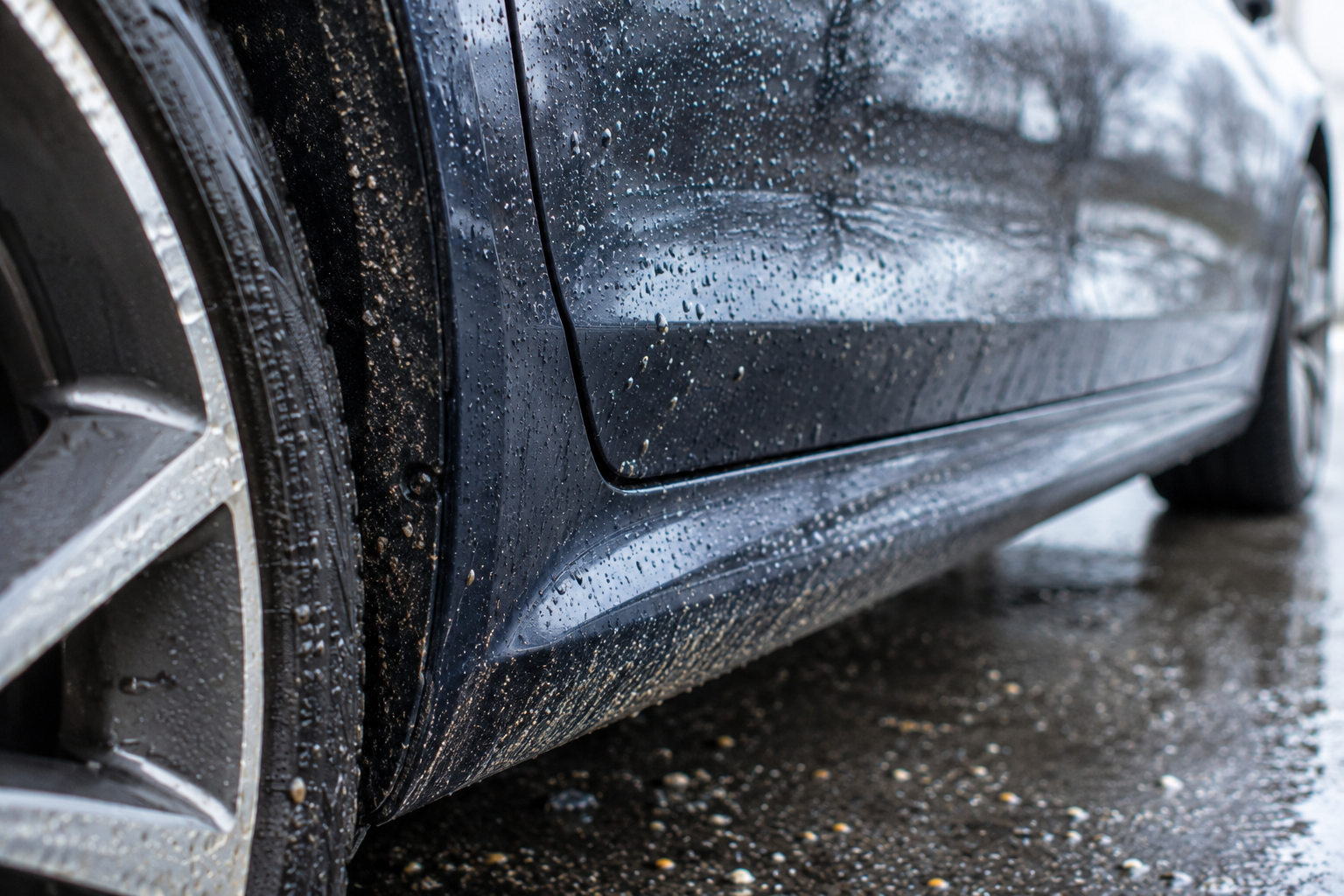
The lowest few inches of the car take the worst of the spray from the road. Repairs to front wings, sills, bumper corners and rear quarters sit directly in the path of salt-laden water thrown up by the tyres, which makes the quality of seams and stone-chip protection in these areas especially important.
Paint Film and Lacquer
Paint repairs are only as durable as the preparation underneath them and the film applied over it. A lacquer that is thin or poorly bonded will chip sooner, and a chip on a repaired panel in January is an open door for salt.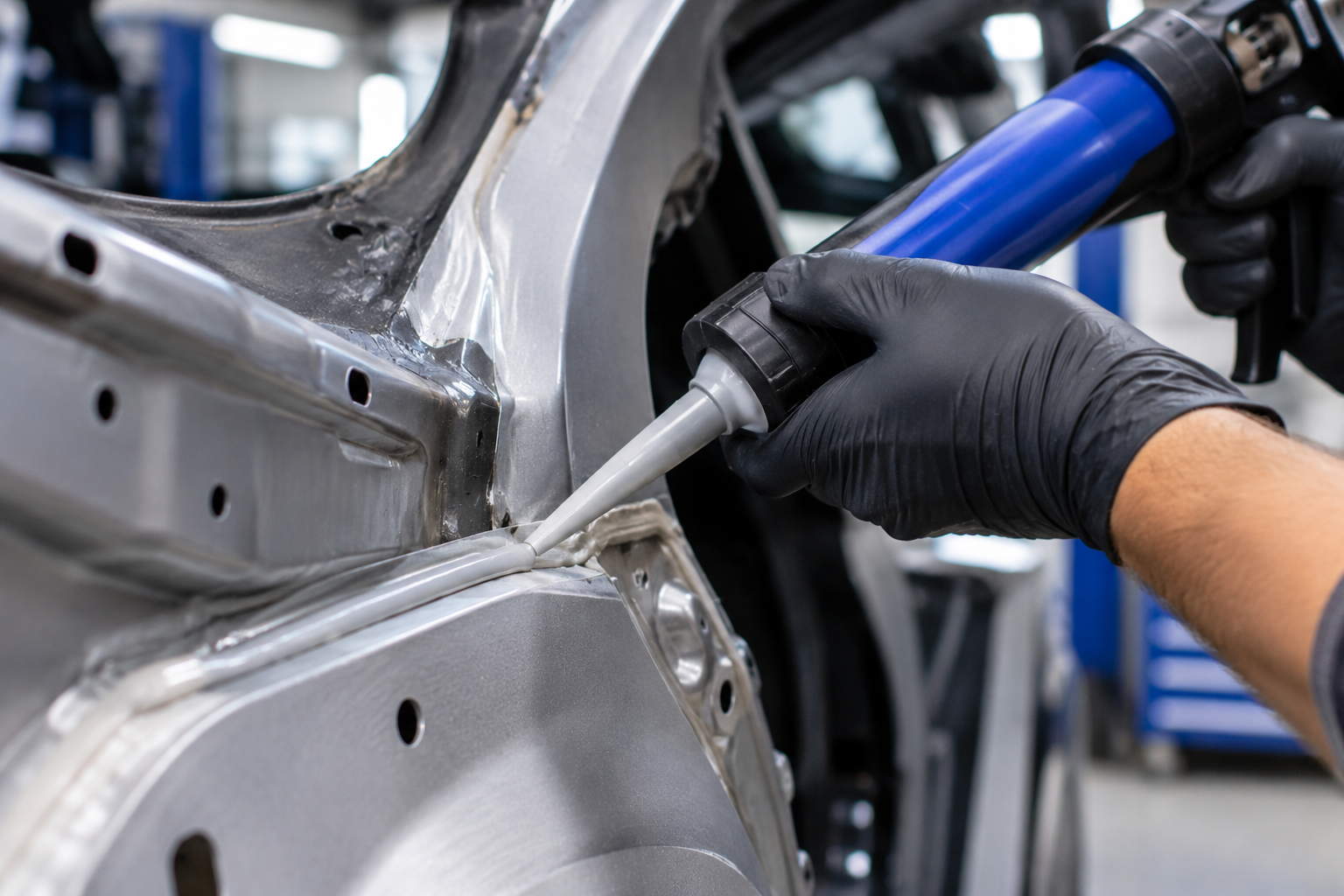
What Does a Proper Repair Do to Resist Salt?
A repair that respects winter is one that restores each protective layer, not just the top one. In broad terms, a prestige bodyshop working to manufacturer methods will:
- Treat bare metal properly. Any exposed steel or aluminium is cleaned and treated with the products specified for that material, rather than being primed over and hoped for the best.
- Restore seam sealer and underbody protection. The sealers and coatings the manufacturer fitted are reapplied where the repair has disturbed them, following the manufacturer’s repair procedure for that model.
- Protect cavities after welding or panel replacement. Hollow sections are re-protected on the inside, not just painted on the outside.
- Prepare and coat each panel edge. Edges and returns are coated and sealed rather than left as bare or thinly covered metal.
- Use the right materials for the right metal. Mixing metals without isolating them can set up galvanic corrosion, which salt accelerates. This is a real concern on cars that combine steel with aluminium.
A bodyshop holding BSI approval is assessed against a published repair standard that covers repair methods and records. That independent oversight is one reason to ask a repairer how they handle these steps, not just how the paint looks.
What Should You Look For After a Repair as Winter Arrives?
You do not need to be a technician to keep an eye on a repair. The aim is to spot small problems while they are small, ideally before salt has had a chance to take hold.
Between the end of October and spring, it is worth checking repaired areas in good light every few weeks. Look at:
- Paint edges and panel gaps. Any lifting, bubbling or a faint line where paint meets a seam should be noted.
- Stone chips on lower panels. Chips that reach the primer or metal are where salt gets in.
- Sills and the bottom of doors. Small blisters in the paint here can indicate moisture getting underneath.
- Wheel arch lips. These collect spray and debris, and it is easy to miss early staining.
Keeping the car clean through winter helps too. Salt left sitting on paint and in seams works the whole time it is there, so rinsing it off, including from the lower panels and arches, removes the damp salty film that does the harm. A wash is not a substitute for a good repair, but it stops a good repair being worked on every day.
If you spot anything on a repaired panel, tell the bodyshop that did the work promptly, and keep a photograph with the date. Early reports are easier to deal with than a problem that has had a winter to develop.
Can You Ask the Bodyshop to Prove the Corrosion Protection Was Done?
Yes, and a good repairer will expect the question. Your repair is a significant piece of work on an expensive asset, and you are entitled to understand what was done to it.
Questions worth asking at estimate and again at handover:
- Will the repair follow the vehicle manufacturer’s published procedure, including corrosion protection and sealing?
- Will the inside of any welded or replaced box sections be re-protected?
- Which repair areas are covered by a guarantee, and for how long?
- What paperwork will I receive recording the work carried out?
Remember that you can choose which bodyshop repairs your car, even where an insurer recommends a particular repairer. If the quality of corrosion protection matters to you, and on a prestige car it should, say so when you discuss the claim, in writing if you can.
Does Winter Affect Repairs Differently on Aluminium and Mixed-Material Cars?
It can. Many modern cars use aluminium panels, high-strength steel and composites in the same body, and each behaves differently when exposed to salt. Aluminium does not rust in the way steel does, but it corrodes in its own manner, and contact between aluminium and steel without proper isolation can encourage corrosion at the join.
For this reason, repair procedures for aluminium-intensive vehicles often specify particular fasteners, adhesives and isolation measures, and require equipment kept separate from steel work to avoid cross-contamination. If your car has aluminium panels, ask specifically how the repair addresses it.
Do Cameras and Sensors Matter in a Salty Winter?
They do. Radar units, cameras and parking sensors sit in bumpers, grilles and windscreens, which are the surfaces that take the most spray. After a repair that disturbed any of them, they need to be refitted and recalibrated correctly, and they need to stay clean to work reliably. Slush and salt film can obscure sensors and trigger warnings, so a quick wipe of the relevant areas is sensible in winter.
If a warning appears after a repair, do not ignore it. Report it to the bodyshop so it can be checked, because a sensor that is dirty is a nuisance, but one that is out of calibration is a different matter.
FAQ
Does road salt damage repaired bodywork more than original paint?
It can, if the repair has not restored every protective layer. Salt attacks any area where paint, sealer or corrosion protection is thin or missing, and repaired areas such as panel edges, seams and hidden cavities are where that is most likely. A repair done to the manufacturer’s method, with sealing and cavity protection restored, is designed to resist this.
How soon after a repair should I worry about salt?
There is no need to worry, but it is sensible to inspect repaired areas regularly through winter. Check paint edges, lower panels, sills and wheel arches for chips, bubbling or lifting, and report anything to your bodyshop promptly so it can be assessed while it is still minor.
Should I wash my car more often in winter after a repair?
Rinsing salt off regularly helps, because salt that stays on paint and in seams keeps working. Pay attention to the lower panels, sills and wheel arches. A wash does not replace a properly carried out repair, but it reduces the amount of salt your bodywork has to withstand.
What should I ask my bodyshop about corrosion protection?
Ask whether the repair follows the manufacturer’s procedure for sealing and corrosion protection, whether hollow sections that were welded or replaced have been re-protected inside, which parts are covered by a guarantee, and what paperwork records the work. A good bodyshop will answer these directly.
Can I choose my own bodyshop if my insurer suggests another?
Yes. Policyholders can choose their own repairer even when the insurer recommends one from its network. Telling your insurer your preference early in the claim keeps the decision with you.
Does Crash Specialist Garage repair prestige and aluminium-bodied cars?
Yes. Crash Specialist Garage is a BSI-approved accident repair bodyshop in Macclesfield, repairing prestige and mainstream marques to manufacturer standards, including ADAS recalibration.
A Repair Should Be Built for the Winter, Not Just the Handover
The test of a good repair is not how it looks on collection day. It is how it looks after a winter of grit, slush and standing water, and that depends on work nobody sees: sealed seams, protected cavities and a finish applied to the standard the manufacturer intended.
If your car has been in an accident and you want it repaired with that winter in mind, get in touch with Crash Specialist Garage in Macclesfield to arrange an assessment.