Introduction
Your heart is racing. Your hands are shaking. And somewhere between the adrenaline and the confusion, someone is probably telling you to call your insurer straight away.
Stop. Take a breath. There are a few things you should do first — and they could make a significant difference to how your claim unfolds.
Most drivers assume that calling their insurance company is the immediate next step after an accident. In reality, the decisions you make in the first 24 hours can affect everything: the quality of your repair, whether you end up out of pocket, and even who gets to choose where your car is fixed. This guide walks you through exactly what to do — calmly, clearly, and in the right order.
Whether it was a minor scrape in a car park or a more serious collision on the road, this post covers the key steps every driver should take before an insurer enters the picture.
Step 1: Make Sure Everyone Is Safe and the Scene Is Secure
Check for injuries first
Before anything else, check yourself and any passengers for injuries. If anyone is hurt — however minor it may seem — call 999 immediately. Don’t move injured people unless there is an immediate danger, such as fire.
If you’re on a busy road or motorway, switch on your hazard lights and, where it’s safe to do so, move to the hard shoulder or a safe distance from traffic. If you have a warning triangle, place it at least 45 metres behind your vehicle.
Call 999 or 101 if required
You must call the police if:
- Anyone has been injured
- A driver has left the scene without providing details
- You suspect the other driver is under the influence of alcohol or drugs
- Road debris or damage is creating a hazard for other drivers
For minor collisions with no injuries and both parties present, you don’t necessarily need the police — but it’s always worth considering if things get heated or facts are disputed.
Don’t admit fault
This is important. Even a polite “I’m so sorry” at the scene can be used later as an admission of liability. Keep conversation factual and calm. Exchange information, but don’t discuss who was to blame.
Step 2: Gather Evidence While You’re Still at the Scene
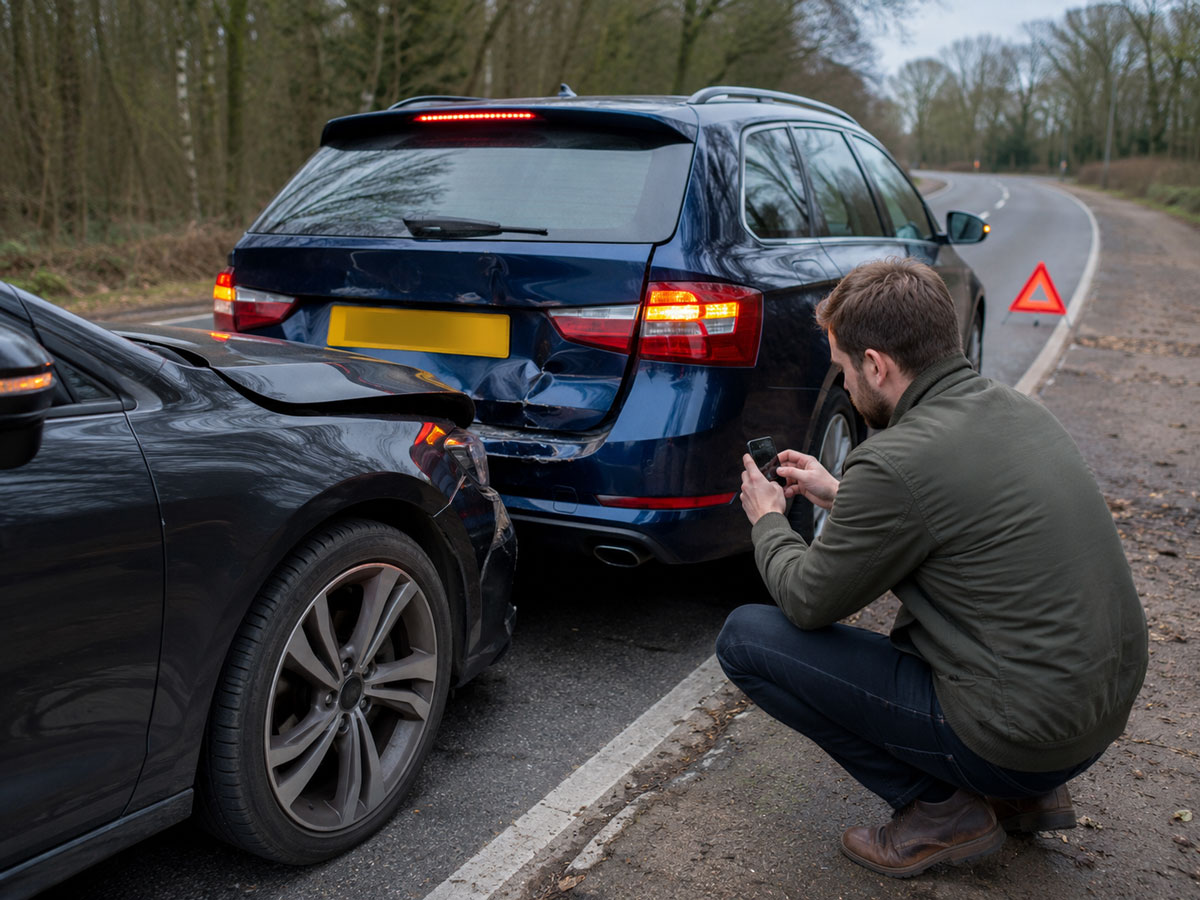
Take photos and video
Your smartphone is one of your most valuable tools right now. Document:
- All vehicles involved — from multiple angles, showing damage and registration plates
- The wider scene — road markings, traffic signs, skid marks, weather conditions
- Any injuries — if safe and appropriate to do so
- CCTV cameras nearby — note their locations so footage can be requested later
- Dashcam footage — if you have a dashcam, do not overwrite the footage; save or lock the clip immediately
The more evidence you gather at the scene, the stronger your position will be — regardless of who was at fault.
Exchange details with the other driver
You are legally required to exchange the following information:
- Full name and address
- Vehicle registration number
- Insurance company name and policy number
Take a photo of their driving licence if they’ll allow it. Also note the make, model and colour of their vehicle. If there were witnesses, ask for their names and contact details — this can be invaluable if the claim is disputed.
Note the time, date and location
Write it down or record a voice note. It sounds obvious, but in the stress of the moment it’s easy to forget. Include the direction you were travelling and a description of road conditions.
Step 3: Understand Your Rights Before You Ring Your Insurer
This is the step most drivers skip — and it can cost them.
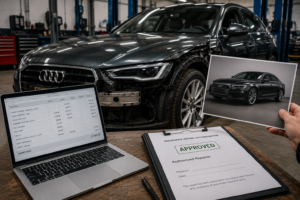
You have the right to choose your own repairer
Your insurer may tell you to use one of their “approved” repairers. What they often don’t make clear is that this is a suggestion, not a requirement. Under UK law, you are entitled to choose where your vehicle is repaired. The insurer cannot force you to use a specific bodyshop.
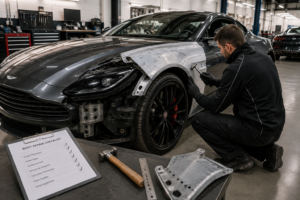
This matters because approved repairer networks often operate on tight margins, which can mean pressure to use non-OEM (non-original manufacturer) parts, rush timescales, or cut corners on complex repairs. If you own a prestige, specialist or high-value vehicle, this is especially important.
Your Insurer Can’t Tell You Where to Get Your Car Repaired — Here’s What the Law Actually Says
Understand the difference between fault and non-fault claims
If the accident wasn’t your fault, you may be entitled to have your vehicle repaired at no cost to yourself, with no impact on your no-claims bonus. You may also be entitled to a like-for-like courtesy vehicle while yours is being repaired. Knowing this before you speak to your insurer means you’re less likely to accept a lesser offer under pressure.
The Truth About Courtesy Cars After a Non-Fault Accident — What You’re Actually Entitled To
Don’t feel rushed
Insurers can sometimes create a sense of urgency — as though you must make decisions immediately. You don’t. You have time to do your research, choose a repairer you trust, and make sure the process works in your favour.
Step 4: Report the Accident to Your Insurer — At the Right Time
When to notify your insurer
Most policies require you to report an accident “as soon as reasonably practicable” — not necessarily within hours. Check your policy documents, but in most cases you have at least 24 hours, and often longer.
If the accident was clearly not your fault and the other driver’s insurer will be covering costs, you still need to notify your own insurer — but you’re not obliged to claim through them.
What to say (and what not to say)
When you do call:
- Stick to the facts — what happened, where, when
- Have your evidence ready: photos, witness details, the other driver’s information
- Don’t speculate about fault
- Ask what your policy covers before agreeing to anything
And crucially: tell them which bodyshop you want to use. If you’ve already identified a specialist repairer you trust, say so upfront. Don’t wait for them to suggest one.
Conclusion
The first 24 hours after an accident can feel overwhelming — but staying calm and following these steps puts you in a much stronger position. Gather evidence, know your rights, and don’t feel pressured into quick decisions before you’re ready.
At Crash Specialist Garage in Macclesfield, we work with drivers every day who are navigating exactly this situation. If you’ve been in an accident and want straightforward advice on your repair options — without the pressure — give us a call or get in touch online. We’re here to help.
Related posts:
• Your Insurer Can’t Tell You Where to Get Your Car Repaired — Here’s What the Law Actually Says
• The Truth About Courtesy Cars After a Non-Fault Accident — What You’re Actually Entitled To
• Non-Fault Accident? Don’t Let the At-Fault Insurer Control Your Repair
Frequently Asked Questions
Not necessarily. Most policies require you to report an accident “as soon as reasonably practicable,” which gives you time to gather evidence and understand your options. Check your policy documents for the specific timeframe, but you’re rarely required to call within minutes.
This is a serious situation. Note their registration plate, call the police (101 or 999 if there’s a safety risk), and report the incident as a hit-and-run. Do not follow or confront them. Your insurer can pursue an untraced driver claim through the Motor Insurers’ Bureau (MIB).
No. You have the legal right to choose your own bodyshop. Your insurer can recommend one, but they cannot compel you. If a repairer is not up to your standards — particularly for a prestige or specialist vehicle — you are entitled to take your car elsewhere.
Lock or save the clip immediately after the accident to prevent it being overwritten. Most dashcams have a button to protect footage, or you can remove the SD card and copy the files. Dashcam footage can be decisive in disputed claims.
Generally, no — especially without a written agreement. Without documentation, you have no protection if they later deny involvement or if hidden damage emerges. Always go through the proper insurance channels.
External sources:
• GOV.UK — What to do after a road traffic accident