
Introduction
Being involved in an accident that wasn’t your fault is stressful enough. What makes it worse is when the other driver’s insurer contacts you almost immediately — friendly, efficient, and seemingly ready to sort everything out for you.
It can feel like a relief. Someone is taking charge, handling the paperwork, and promising to get your car fixed quickly. But there’s something important you should know before you hand over control: the at-fault insurer is not on your side.
They are acting in the interests of their policyholder — and themselves. Their goal is to settle your claim as cheaply and quickly as possible. That means controlling where your car is repaired, what parts are used, how long the repair takes, and what replacement vehicle — if any — you receive in the meantime.
This guide explains how to protect yourself after a non-fault accident, what you’re actually entitled to, and why keeping control of your own claim is almost always in your best interest.
Why the At-Fault Insurer Contacts You So Quickly
Speed is a strategy
When the at-fault insurer calls you within hours of an accident, it’s not purely out of goodwill. Early contact is a deliberate strategy. The faster they can get you into their managed process, the more control they have over the cost of the claim — and the less you’re likely to seek independent advice.
Once you’ve agreed to let them manage your repair, agreed to their courtesy car, and agreed to their timeline, it becomes much harder to push back later.
What “managing your claim” actually means
When an at-fault insurer offers to manage everything for you, it typically means:
- Directing your car to a repairer from their approved network
- Providing a basic courtesy car — often not equivalent to your own vehicle
- Setting repair timescales that may prioritise cost over quality
- Using parts that meet their cost targets, not necessarily your manufacturer’s specification
None of this is illegal. But it means the settlement you receive may be considerably less than what you’re genuinely entitled to under the law.
What You’re Actually Entitled to as a Non-Fault Driver
The legal principle: being made whole
Under UK tort law, the principle governing non-fault claims is simple: the at-fault party must put you back in the position you were in before the accident. This is sometimes called being “made whole.”
In practice, this means:
- Your vehicle should be repaired to the same standard as before — using appropriate parts and the necessary expertise
- You should have access to a like-for-like replacement vehicle for the full duration of your repair
- You should not be out of pocket as a result of the accident
These aren’t negotiable positions — they are your legal rights. The at-fault insurer may not present them as such, but that doesn’t make them any less true.
OEM parts vs non-OEM parts
If your car is repaired using non-original manufacturer (non-OEM) parts, it may not be returned to the same standard as before the accident. This matters particularly for:
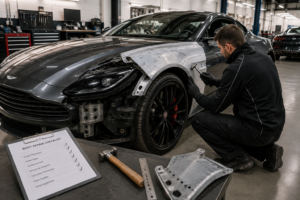
- Prestige and performance vehicles where OEM specifications are critical
- Safety-critical components such as bumpers, structural panels, and airbag systems
- Cars still within manufacturer warranty, where non-OEM parts could affect coverage
You are entitled to insist on OEM parts if that is what is necessary to restore your vehicle to its pre-accident condition.
ADAS recalibration
Modern vehicles contain sophisticated driver assistance systems that must be recalibrated after certain types of collision — even relatively minor impacts. If the repairer carrying out your repair doesn’t have the equipment and expertise to carry this out, your car may be unsafe even after the bodywork looks perfect.
How the At-Fault Insurer May Try to Limit Your Claim
Understanding the tactics used can help you recognise them when they happen — and respond appropriately.
Pressure to accept a quick settlement
You may be offered a cash settlement early in the process, before the full extent of damage is known. Accepting a premature settlement can leave you short if additional damage emerges, or if the repair costs more than anticipated. Never accept a settlement figure without having a proper assessment carried out by a repairer you trust.
Downgrading your replacement vehicle
The at-fault insurer may offer a courtesy car that is significantly below the class of your own vehicle. As a non-fault driver, you are entitled to a like-for-like replacement through credit hire — at no cost to you — for the full duration of your repair. Don’t settle for a downgrade without understanding your options.
The Truth About Courtesy Cars After a Non-Fault Accident
Pressuring your chosen repairer on timescales
Once your car is in a bodyshop, the at-fault insurer may contact the repairer directly to push for faster completion. A quality-focused specialist will push back on unreasonable pressure. A high-volume approved repairer may not.
Disputing the repair scope
Insurers sometimes dispute what repairs are necessary, or argue that certain damage was pre-existing. A reputable repairer will document the damage thoroughly and provide a clear, evidenced repair report that supports the full scope of work required.
How to Keep Control of Your Non-Fault Claim
Don’t rush into anything
If the at-fault insurer calls you immediately after an accident, you don’t have to make any decisions on the spot. Take their details, thank them for calling, and tell them you’ll be in touch. Then take time to understand your rights and your options.
Instruct your own repairer first
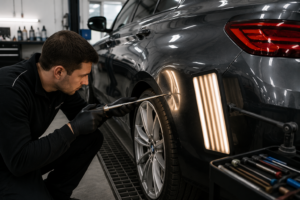
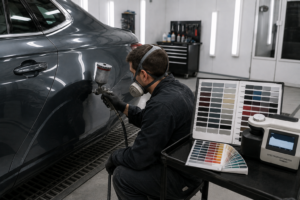
Contact a specialist repairer you trust and let them guide the process. A good bodyshop experienced in non-fault claims will handle the insurer liaison on your behalf, arrange your replacement vehicle, manage the engineer assessment, and ensure the repair is carried out to the right standard.
Notify your own insurer too
Even if you’re pursuing the claim through the at-fault insurer, you should still notify your own insurer that the accident has occurred. You don’t have to claim through them, but keeping them informed is a condition of most policies.
Get everything in writing
Whether it’s your agreement on repair scope, parts specification, or replacement vehicle arrangements — get confirmation in writing. Don’t rely on verbal assurances from an insurer whose interests are not aligned with yours.
Know when to escalate
If the at-fault insurer is being obstructive, unreasonable, or simply not responding, you have options. Your own insurer may be able to assist. A solicitor specialising in non-fault claims can act on your behalf. And if all else fails, the Financial Ombudsman Service can adjudicate on disputes.
Conclusion
A non-fault accident is frustrating enough without the at-fault insurer making it worse by taking control of your repair. The good news is that you don’t have to let them.
You have legal rights — to choose your own repairer, to a like-for-like replacement vehicle, to OEM-quality repairs, and to a settlement that genuinely puts you back where you were before the accident. Knowing and exercising those rights is the best way to protect yourself.
At Crash Specialist Garage in Macclesfield, we specialise in non-fault claims and work with drivers every day to ensure they get the repair and settlement they’re entitled to — not just what the at-fault insurer initially offers. Get in touch and we’ll talk you through your options.
Related posts:
• Your Insurer Can’t Tell You Where to Get Your Car Repaired — Here’s What the Law Actually Says
• The Truth About Courtesy Cars After a Non-Fault Accident — What You’re Actually Entitled To
• What to Do in the First 24 Hours After an Accident (Before You Call Your Insurer)
Frequently Asked Questions
No. You can instruct a solicitor or claims specialist to handle communications on your behalf. Many specialist bodyshops also manage insurer liaison as part of their service. You are under no obligation to speak directly with an insurer who is acting against your interests.
It depends on what you’ve agreed to and when. If repairs haven’t started, you may still be able to change your repairer. If you’ve accepted a settlement, this is harder to reverse — which is why it’s important not to rush into agreements. Seek advice from a solicitor or the Citizens Advice Bureau if you’re unsure.
Yes. If you or any passengers suffered injuries — however minor — you may be entitled to compensation. This is separate from the vehicle repair claim and is typically handled by a solicitor. Don’t accept a full and final settlement for your vehicle without being aware of any personal injury entitlements.
If the at-fault driver has no insurance, you can make a claim through the Motor Insurers’ Bureau (MIB), which exists specifically to compensate victims of uninsured and untraced drivers. Your own insurer can advise on the process.
It varies depending on the complexity of the damage, whether liability is disputed, and how cooperative the at-fault insurer is. A straightforward claim handled by a specialist can often be resolved within a few weeks. Complex or disputed claims can take longer. Working with an experienced repairer who handles insurer liaison will generally speed up the process.
External sources:
• Citizens Advice — If you have a car accident