Introduction
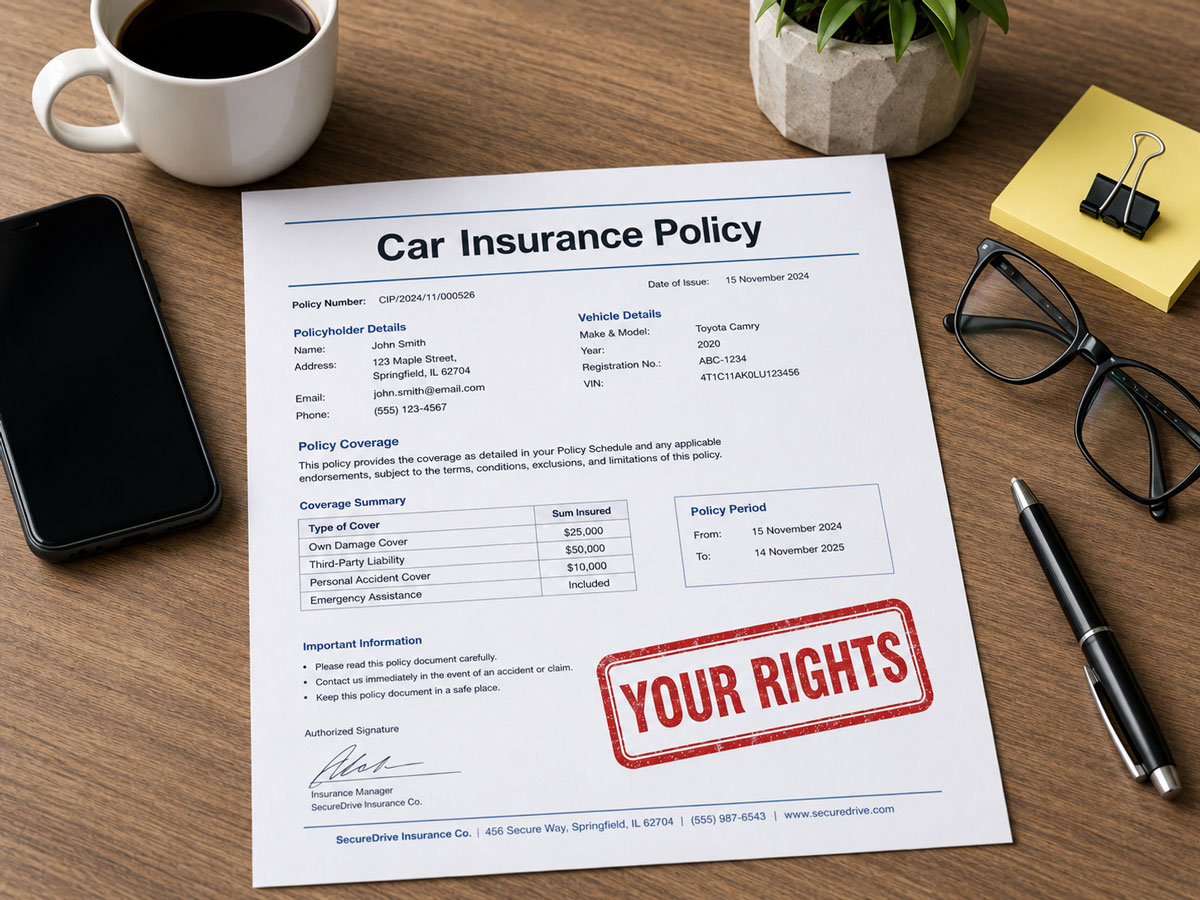
Being involved in a road accident that wasn’t your fault is one of those situations where knowing your rights makes an enormous difference — not just to your stress levels, but to the practical outcome: the quality of your repair, the vehicle you drive while yours is being fixed, and whether you end up out of pocket.
The problem is that the people who have a financial interest in explaining your rights clearly — primarily the at-fault driver’s insurer — are not always inclined to do so. The less you know, the more straightforward it is for them to manage the claim cheaply.
This guide covers the key rights you have as a non-fault driver in the UK, in plain English, so that you can enter the process informed and protected.
Your Core Legal Rights as a Non-Fault Driver
The legal foundation of your rights after a non-fault accident is the principle of tort law: the party responsible for causing you loss must put you back in the position you were in before the accident occurred. This is sometimes called being “made whole.”
In practice, this translates into a series of specific rights that apply to almost every non-fault claim.
Right 1: The Right to Choose Your Own Repairer
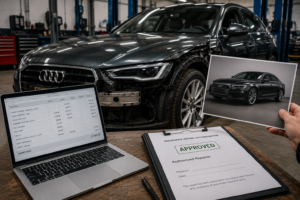
You are legally entitled to choose where your vehicle is repaired. The at-fault insurer — or your own insurer — may recommend a repairer from their approved network. They cannot compel you to use it.
This right exists because the quality of an insurance-approved repairer is not guaranteed to match that of a specialist. Approved networks operate on volume deals and reduced rates, which can lead to pressure to use non-OEM parts, faster turnarounds than the repair warrants, or a lack of specialist expertise on prestige or technically complex vehicles.
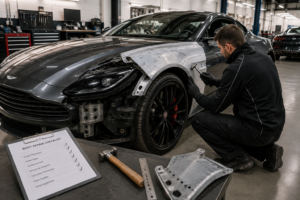
If you own a high-value, prestige, or specialist vehicle, this right is particularly important to exercise. Insist on a bodyshop with proven expertise in your make and model, and make that clear to the insurer from your first contact with them.
Your Insurer Can’t Tell You Where to Get Your Car Repaired — Here’s What the Law Actually Says
Right 2: The Right to a Like-for-Like Replacement Vehicle
While your car is being repaired, you are entitled to a replacement vehicle of similar size, specification, and suitability to your own — for the full duration of the repair — at no cost to you.
This is not a courtesy car in the traditional sense. It is a credit hire vehicle, provided by a specialist company and funded by the at-fault insurer. It is distinct from the basic courtesy car your own insurer might offer through their approved repairer network.
What this means in practice:
- If you drive a 4×4 or large SUV, you’re entitled to a comparable vehicle — not a city car
- If you drive a prestige vehicle, you should receive an equivalent-class replacement
- If you use your vehicle for business purposes, that should be reflected in the replacement provided
- The replacement should be available from the date your vehicle is off the road, not just from the day repairs begin
Do not accept a downgraded vehicle simply because it’s what the insurer offers first.
The Truth About Courtesy Cars After a Non-Fault Accident — What You’re Actually Entitled To
Right 3: The Right to OEM-Quality Repairs
You are entitled to have your vehicle repaired to the same standard as it was before the accident. For most modern vehicles — and certainly for any prestige or specialist car — that means using genuine original manufacturer (OEM) parts.
The at-fault insurer will often push for non-OEM (pattern or aftermarket) parts, which are cheaper. You are within your rights to insist on OEM parts if that is what is required to genuinely restore your vehicle to its pre-accident condition.
This matters for several reasons:
- Safety: Structural and safety-critical components must meet manufacturer specifications
- Warranty: Non-OEM parts may affect your manufacturer warranty
- Resale value: A vehicle repaired with non-genuine parts may be worth less at point of sale
- Fit and finish: Pattern parts are copies, not originals — quality varies
Get written confirmation from your repairer that OEM parts will be used before authorising any work.
Right 4: The Right to Have ADAS Systems Properly Recalibrated
Modern vehicles contain sophisticated driver assistance systems — cameras, radar sensors, ultrasonic sensors — which are often housed in panels directly affected by a collision. After an accident, these systems may require recalibration to function correctly.
You are entitled to have this work carried out as part of your repair at the at-fault insurer’s cost. It is not an optional extra — it is a necessary part of restoring your vehicle to its pre-accident condition.
Not all repairers have the equipment or expertise to carry out ADAS calibration for all vehicle makes and models. Before you agree to a repairer, ask whether they can handle the calibration requirements for your specific vehicle.
Right 5: The Right Not to Lose Your No-Claims Bonus
In a correctly handled non-fault claim, your no-claims bonus should be unaffected. The at-fault driver’s insurer covers the cost of the claim; your own policy is essentially untouched.
If your insurer suggests your no-claims bonus will be affected by a non-fault claim, ask them to explain why in writing. If the answer is unsatisfactory, you have grounds to escalate.
Right 6: The Right to Recover All Reasonable Out-of-Pocket Expenses
Beyond the vehicle repair itself, you may be entitled to recover other losses caused by the accident. These can include:
- Taxi fares or public transport costs incurred while your vehicle was off the road
- Storage fees if your vehicle was recovered to a compound
- Loss of earnings if you were unable to work as a result of the accident
- Personal injury compensation if you or a passenger were hurt
Keep receipts and records of everything. A good claims handler or solicitor will advise you on what is recoverable in your specific circumstances.
What to Do if Your Rights Are Being Ignored
Step 1: Put everything in writing
Document your position clearly and in writing. If you’ve been told something verbally that you believe is incorrect, follow it up with an email. A paper trail is invaluable if a dispute escalates.
Step 2: Escalate within the insurer
All insurers have a formal complaints process. If you’re not getting a fair response from the person you’re dealing with, ask to escalate to a manager or complaints department.
Step 3: Contact the Financial Ombudsman Service
If you’ve exhausted the insurer’s complaints process without resolution, you can refer your case to the Financial Ombudsman Service (FOS). The FOS is independent, free to use, and can require insurers to change their position if they’ve acted unfairly.
Step 4: Speak to a solicitor
For more complex disputes — particularly where personal injury, significant financial loss, or liability is involved — a solicitor specialising in motor claims can act on your behalf and ensure your rights are fully protected.
Conclusion
A non-fault accident should not leave you worse off than you were before it happened. That’s not just a reasonable expectation — it’s a legal principle. You have the right to a proper repair, a suitable replacement vehicle, genuine parts, and a settlement that genuinely reflects your loss.
At Crash Specialist Garage in Macclesfield, we help non-fault drivers understand and exercise their rights every day. From handling insurer liaison to arranging like-for-like replacement vehicles and ensuring every repair meets the standard your vehicle deserves, we’re on your side from the first call to the final handover.
If you’ve been in a non-fault accident and aren’t sure where you stand, get in touch. We’ll give you a clear, honest answer.
Related posts:
• Non-Fault Accident? Don’t Let the At-Fault Insurer Control Your Repair
• The Truth About Courtesy Cars After a Non-Fault Accident — What You’re Actually Entitled To
• Your Insurer Can’t Tell You Where to Get Your Car Repaired — Here’s What the Law Actually Says
Frequently Asked Questions
Disputed liability doesn’t remove your rights — it complicates the process. Your own insurer may handle the claim on your behalf while liability is being resolved. A solicitor can be invaluable in disputed cases, particularly where the evidence is unclear. In the meantime, document everything thoroughly: photos, witness details, dashcam footage.
Yes, these are separate claims. Personal injury compensation — even for minor whiplash or soft-tissue injuries — is handled independently from the vehicle repair claim. Don’t accept a vehicle settlement that includes a waiver of injury claims without taking legal advice first.
If the at-fault driver has no insurance, your claim goes through the Motor Insurers’ Bureau (MIB), which exists to compensate victims of uninsured and untraced drivers. Your own insurer can advise on the process, and a solicitor can manage it on your behalf.
For vehicle damage, you generally have up to six years under the Limitation Act. For personal injury, the standard limitation period is three years from the date of the accident. These deadlines mean you don’t need to rush decisions — but don’t leave it too long either.
No. You can instruct a solicitor or specialist claims handler to manage all communications on your behalf. Many bodyshops also handle insurer liaison as part of their service. There is no obligation to deal directly with an insurer acting against your interests.
External sources:
• Citizens Advice — Car accidents and insurance claims