Introduction
After a collision, most drivers focus on what they can see: the dented panel, the broken light, the cracked bumper. What’s visible on the surface is real and needs repair — but it’s often not the whole story.
Modern vehicles are engineered with complex structural systems designed to absorb and redirect collision energy. A car that looks relatively intact after a crash may have sustained significant structural damage beneath the surface — damage that affects its rigidity, its safety in a future collision, and the correct functioning of its electronics and ADAS systems.
This guide explains what structural damage actually is, why it’s so often missed, and why it matters so much that any post-accident repair includes a proper structural assessment.
How Modern Car Structures Are Designed
Crumple zones and energy management
Modern vehicles are not built to be rigid. They are built to crumple in specific, controlled ways during a collision, absorbing energy and directing it away from the occupant compartment. This controlled deformation — crumple zone design — is one of the most significant advances in vehicle safety engineering.
The problem is that this means a collision can cause significant deformation of structural components that are entirely hidden from view — while the visible bodywork looks relatively minor.
The occupant safety cell
Surrounding the passenger compartment is a reinforced safety cell — sometimes called the safety cage. This is the part of the vehicle that must remain intact in a collision to protect the occupants. It is built from high-strength steel and, in modern vehicles, often incorporates ultra-high-strength steel (UHSS) and boron steel that can only be safely repaired using specialist equipment and techniques.
Types of Structural Damage That May Not Be Visible
Chassis rail deformation
The chassis rails run along the underside of the vehicle from front to rear. In a frontal or rear collision, these rails absorb energy by compressing or buckling. From above or from the side, the damage may not be apparent — but the vehicle’s geometry and structural integrity can be significantly affected.
Firewall intrusion
In more serious frontal collisions, energy can be transmitted through the crumple zones into the firewall — the structural panel that separates the engine bay from the passenger compartment. Even minor firewall deformation is a serious structural concern.
Sill and floor pan damage
The sills and the floor pan are critical to the vehicle’s torsional rigidity. Side impacts, or frontal/rear impacts that transmit laterally, can affect these components in ways that aren’t visible once the interior trim is in place.
A, B, and C pillar damage
The pillars that support the roof — A (windscreen surround), B (centre, between front and rear doors), and C (rear) — are critical structural components. Damage to these is sometimes detectable visually, but not always.
Sub-frame misalignment
The front and rear sub-frames carry the suspension, steering, and drivetrain components. Misalignment — often caused by collision forces transmitted through the chassis rails — can affect wheel alignment, steering geometry, and handling.
Why Structural Damage Is Missed
Surface repair masking underlying issues
A skilled but inadequately equipped bodyshop can make the exterior of a structurally compromised vehicle look perfect. New panels, fresh paint, and correctly aligned lights tell a misleading story about the vehicle’s condition. Without correct assessment using a vehicle jig, underlying structural issues go undetected.
Inadequate assessment equipment
Properly assessing vehicle structure requires specialist equipment: chassis measurement systems, straightening jigs with manufacturer-specific dimensional data, and in some cases acoustic testing. Not all bodyshops have this equipment.
Compressed timescales
Structural assessment takes time. A bodyshop under pressure to return vehicles quickly may carry out only a visual assessment and proceed without the thorough measurement and diagnostic process that proper structural evaluation requires.
Why It Matters
Safety in a future collision
A structurally compromised vehicle will not perform as designed in a subsequent accident. The crumple zones may not absorb energy correctly. The safety cell may not maintain its integrity. The consequences for occupants can be severe.
ADAS system function
Structural damage — particularly to sub-frames and the body’s alignment — can affect the positioning of sensors and cameras, with direct consequences for ADAS system calibration and function.
What Is ADAS Calibration and Why Every Modern Car Needs It After a Collision
Vehicle value
A vehicle with undetected structural damage that later comes to light — through a specialist inspection at sale — will be significantly devalued. Structural damage that has been properly repaired and documented is worth far more than damage that was missed or concealed.
What a Proper Structural Assessment Involves
A thorough post-accident structural assessment should include:
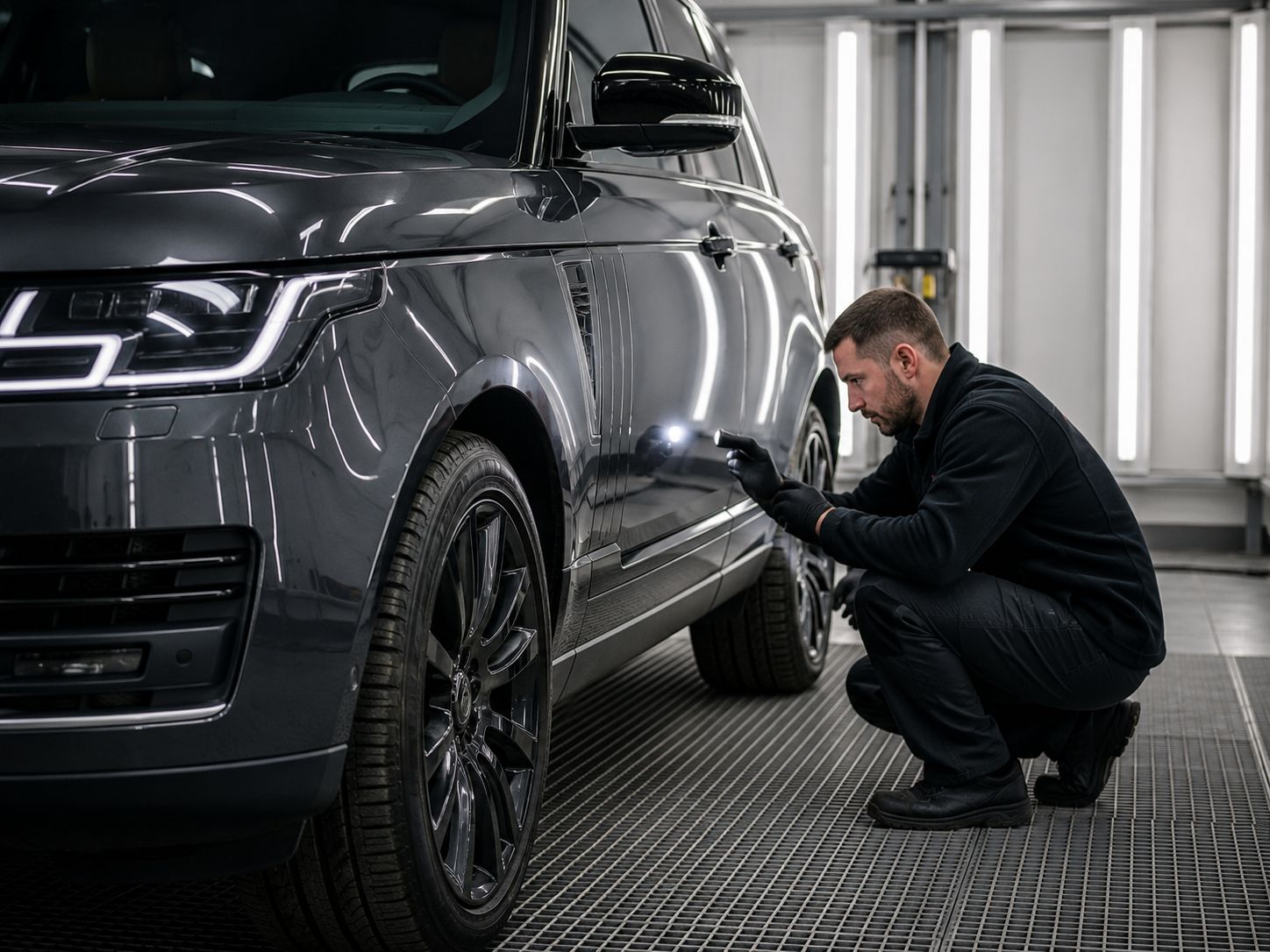
- Visual inspection of all accessible structural components, including under the vehicle
- Dimensional measurement using a chassis jig or measurement system, compared against manufacturer data
- Diagnostic assessment of all ADAS and electronic systems
- Suspension and steering geometry check
- Documentation of findings, with clear notation of any deformation or damage discovered
A quality specialist repairer will carry this out as a matter of course before beginning any repair work.
How Long Does Accident Repair Actually Take — and What Affects the Timeline?
Conclusion
The visible damage after a collision is only part of the picture. For many drivers, the more significant — and more dangerous — damage is what they can’t see. Ensuring that any post-accident repair includes a proper structural assessment is not an optional extra: it is the foundation on which every other element of the repair depends.
At Crash Specialist Garage in Macclesfield, every vehicle that comes to us after a collision undergoes a thorough structural assessment before any repair work begins. We have the specialist equipment and expertise to identify structural damage in prestige and complex vehicles, and we document our findings clearly.
Related posts:
- What Is ADAS Calibration and Why Every Modern Car Needs It After a Collision
- How Long Does Accident Repair Actually Take — and What Affects the Timeline?
- OEM vs Non-OEM Parts: Why It Matters More on Prestige Vehicles
Frequently Asked Questions
In many cases, you won’t be able to tell from the outside. A proper assessment requires specialist measurement equipment. If your vehicle has been in any collision that involved significant impact forces — even if the visible damage appears minor — a structural assessment is strongly recommended.
Yes, in most cases. Modern repair facilities with the correct equipment — chassis jigs, straightening rigs, and appropriate welding and bonding tools — can repair structural damage to manufacturer-approved standards.
Yes. Structural damage resulting from an accident is covered under a comprehensive policy. If your insurer or their assessor disputes the need for structural repair, you can challenge this.
Significant unrepaired structural damage may cause an MOT failure, as it affects the vehicle’s safety. Even damage that doesn’t trigger an immediate failure can affect the vehicle’s performance in future tests if it progresses.
Cat S (Structural) indicates that the vehicle has sustained structural damage and must be repaired correctly before returning to the road. Cat N (Non-Structural) indicates damage is limited to non-structural components. Both categories remain on the vehicle’s history permanently.
External sources: