Introduction
After an accident, one of the first questions on everyone’s mind is: how long is this going to take?
It’s a completely reasonable thing to want to know. You need your car back. You have places to be. And if you’re relying on a courtesy car or a replacement vehicle in the meantime, you want to understand exactly what you’re signing up for.
The honest answer is: it depends. Repair timelines vary enormously depending on the type of damage, the vehicle involved, parts availability, and how the claim is being managed. A minor bumper scuff might be turned around in a day or two. A more complex structural repair on a prestige vehicle could take several weeks.
This guide explains what actually drives repair timescales, what to watch out for, and how to make sure your repair isn’t rushed in ways that compromise quality.
The Main Factors That Affect How Long a Repair Takes
1. The extent and type of damage
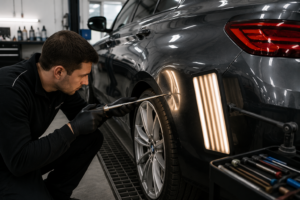
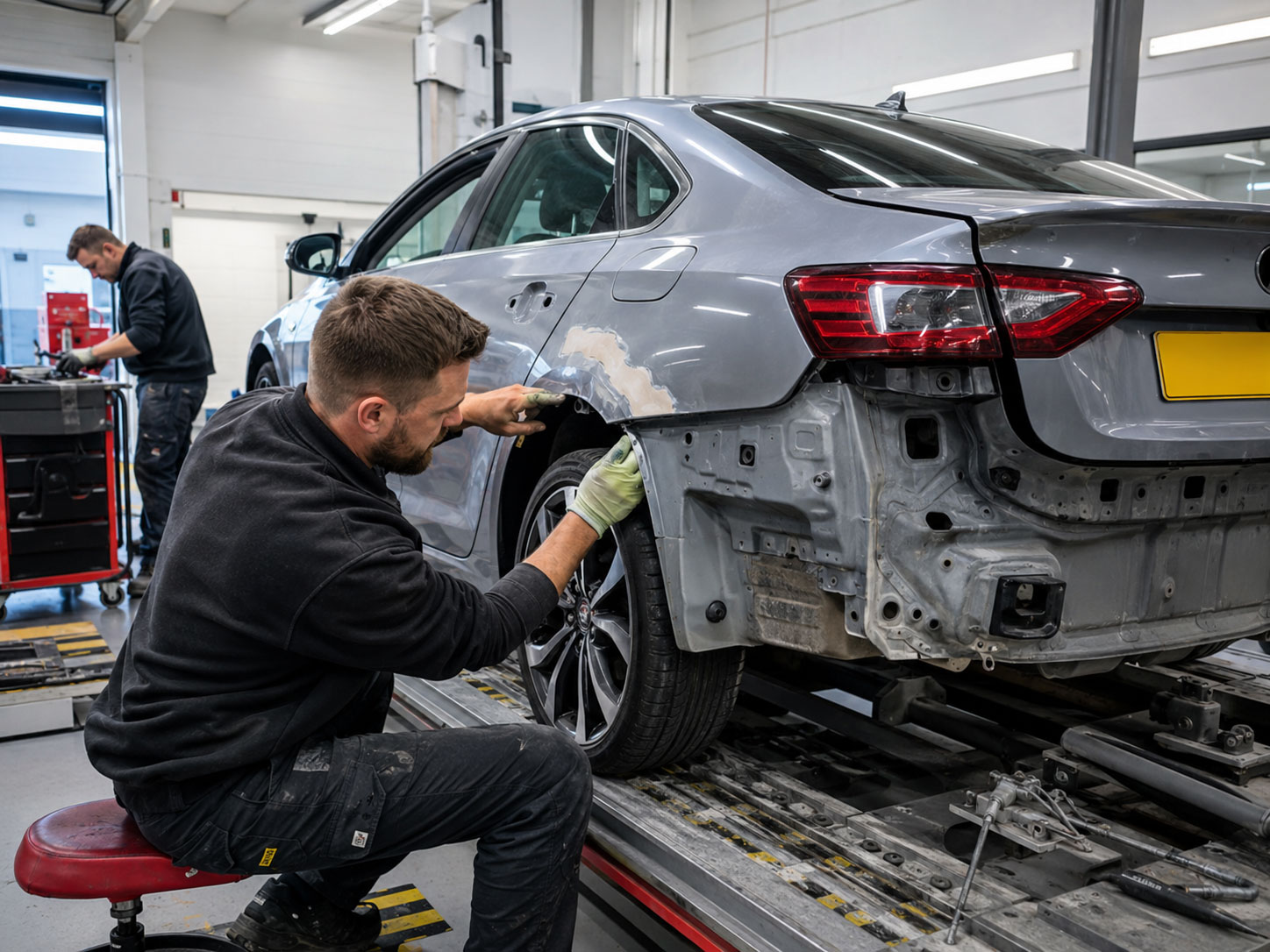
The most obvious factor is simply how much damage there is. A small dent or scratch is very different from a collision that has affected structural panels, crumple zones, or mechanical components.
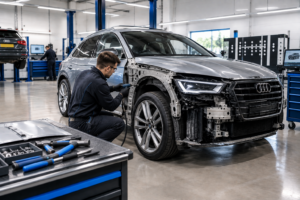
Some damage that looks minor from the outside can conceal more significant issues underneath. Bodywork repairs involving structural elements — such as chassis rails, sill sections, or A/B/C pillars — require careful assessment and specialist equipment to restore correctly. These repairs take longer, and rightly so.
Similarly, damage to the front or rear of a modern vehicle often involves sensors, cameras, and ADAS components that must be properly repaired and calibrated before the car is roadworthy.
2. The make and model of your vehicle
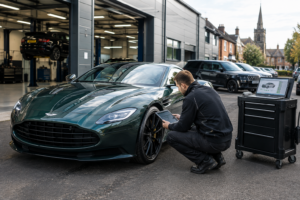
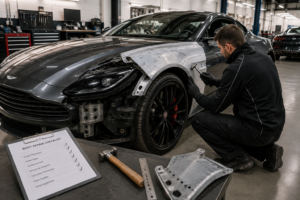
Prestige and specialist vehicles typically take longer to repair than standard cars. There are several reasons for this:
- Parts availability: Genuine OEM parts for premium brands may need to be ordered directly from the manufacturer or an approved distributor, which takes time
- Technical complexity: Aluminium bodywork, carbon fibre panels, and bespoke paint finishes require specialist skills and equipment
- ADAS systems: High-end vehicles often have more sophisticated driver assistance systems that require manufacturer-specific calibration tools
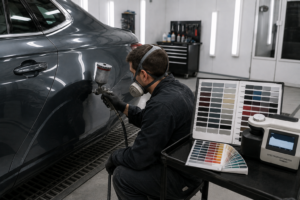
- Paint matching: Specialist paint finishes — such as tri-coat metallics or pearlescent colours — require more time and skill to match invisibly
If your vehicle is a BMW, Mercedes, Audi, Range Rover, Porsche, or similar, expecting the same turnaround as a standard vehicle isn’t realistic — and you wouldn’t want it to be.
3. Parts availability and supply chain
Even with the best will in the world, a repair can only go as fast as parts can be sourced. OEM parts for some vehicles have lead times of several days or even weeks. In some cases — particularly for newer models or limited-production vehicles — parts may need to be back-ordered from the manufacturer.
A good bodyshop will order parts as early as possible in the process — ideally as soon as the initial assessment is complete — to avoid delays once the vehicle is stripped and ready for repair.
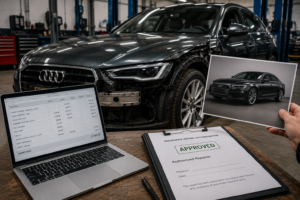
4. The claims and authorisation process
In most insurance-led repairs, work cannot begin until the insurer has authorised the repair. This involves:
- An engineer’s assessment (either in person or via images)
- Review of the repair estimate
- Formal authorisation from the insurer
This process can add days or even weeks to the overall timeline, particularly if there is any dispute about the scope of repair or the parts to be used. Working with a repairer who has established relationships with insurers and handles this process efficiently can make a meaningful difference.
Non-Fault Accident? Don’t Let the At-Fault Insurer Control Your Repair
Typical Repair Timescales: A Rough Guide
While every repair is different, here’s a general sense of what to expect:
| Type of repair | Typical timeframe |
| Minor scratch or scuff (paint only) | 1–3 days |
| Bumper repair or replacement | 2–4 days |
| Panel repair (dent with paint damage) | 3–5 days |
| Multiple panel repairs | 5–10 days |
| Structural or chassis repair | 2–4 weeks |
| Complex prestige vehicle repair | 2–6 weeks |
| Total rebuild / major collision | 6+ weeks |
These are estimates for the repair work itself — authorisation time, parts lead times, and any additional calibration work will add to the overall timeline.
Why You Shouldn’t Let Insurers Rush the Repair
The pressure to complete quickly
Insurance-approved repairers often operate under contractual pressure to return vehicles within set timeframes. For a high-volume bodyshop handling standard vehicles, this may be manageable. For a specialist repairer working on a prestige vehicle with complex damage, it can create an impossible tension between speed and quality.
Rushing a repair can mean:
- Inadequate time for body filler to cure properly, leading to cracking or shrinkage later
- Paint applied before surfaces are properly prepared, causing peeling or colour mismatch
- ADAS calibration skipped or done incorrectly, leaving safety systems compromised
- Structural repairs that pass a visual check but aren’t fully sound
Your right to a proper repair
The quality of the repair matters more than the speed. You are entitled to have your vehicle returned to its pre-accident condition — not just a condition that looks acceptable at first glance. If a repairer is being pressured to rush, that’s worth knowing about.
A good specialist bodyshop will be transparent about realistic timescales from the start and will push back on insurer pressure to cut corners.
Your Insurer Can’t Tell You Where to Get Your Car Repaired — Here’s What the Law Actually Says
How to Make the Process Run as Smoothly as Possible
Choose your repairer early
The sooner you instruct a repairer you trust, the sooner they can begin the assessment, order parts, and start managing the authorisation process. Don’t wait for your insurer to take the lead — contact a specialist directly and let them guide the process.
Be clear about your vehicle’s requirements
Make sure your repairer understands your vehicle’s make, model, specification, and any warranty considerations from the outset. This helps them plan the repair correctly and identify any specialist requirements — such as manufacturer-specific calibration or particular parts sourcing — before they become delays.
Stay in communication
A good repairer will keep you updated throughout the process. Ask for regular updates, particularly if your vehicle is off the road for more than a week. If there are delays — whether due to parts, insurer authorisation, or additional damage discovered during the repair — you should be told promptly and given a revised timeline.
Use your replacement vehicle entitlement
If your car is going to be off the road for any significant period, make sure you have a suitable replacement vehicle in place. As a non-fault driver, you’re entitled to a like-for-like replacement for the full duration of the repair. Don’t be left without transport because the process took longer than expected.
The Truth About Courtesy Cars After a Non-Fault Accident
Conclusion
Repair timescales depend on a lot of factors — some within your control, some not. What you can control is choosing the right repairer, understanding the process, and making sure quality isn’t sacrificed for speed.
At Crash Specialist Garage in Macclesfield, we give every customer a clear, honest timeline from the start — and we keep you informed throughout. We don’t rush repairs to hit insurer targets, and we handle the insurer liaison so you don’t have to.
If you’ve had an accident and want a straight answer on how long your repair is likely to take, get in touch. We’re happy to assess your vehicle and give you a realistic, honest picture.
Related posts:
• What to Do in the First 24 Hours After an Accident (Before You Call Your Insurer)
• Non-Fault Accident? Don’t Let the At-Fault Insurer Control Your Repair
• Your Insurer Can’t Tell You Where to Get Your Car Repaired — Here’s What the Law Actually Says
Frequently Asked Questions
A straightforward bumper repair or replacement usually takes two to four days. This includes preparation, painting, and curing time. If the bumper houses sensors or cameras, additional time will be needed for calibration.
The most common reasons for delays are: waiting for insurer authorisation, parts on back-order, additional damage discovered once the vehicle is stripped, or ADAS calibration requirements. Your repairer should keep you informed of the reason for any delay and provide a revised completion date.
Choosing your repairer quickly, authorising assessment promptly, and responding swiftly to any requests for information will all help. Beyond that, some elements — particularly parts lead times and insurer authorisation — are outside your direct control.
If you’re in a replacement vehicle through a credit hire arrangement, your entitlement to that vehicle extends for the full repair period — you won’t be left without transport if the repair overruns. Your repairer should update you as soon as they know a delay is likely.
Not necessarily. For complex damage, or on prestige vehicles with specialist requirements, a longer repair timeline often means the work is being done properly. A repairer who promises an unusually fast turnaround on a complex job may be cutting corners. Transparency and regular communication from your repairer are far more important than a fast completion date.
External sources:
• GOV.UK — Road traffic accident reporting